What’s BOJ up to in FX & money market?

In Friday’s foreign exchange trading, authorised dealers bought much more foreign exchange than they sold and in a late after hours release, Jamaica’s central bank again decided to mop up more local funds from the financial system.

The timing of the release isn’t isolated from the developments in the foreign exchange market. It seems that the CD issue is linked to what the central bank may consider to be holding of a long position in US dollar by financial institutions. According to the release from the bank, the issues are “to augment its liquidity management operations, the Bank of Jamaica will be offering two variable rate instruments commencing Monday, 01 July 2013 to Thursday, 04 July 2013. The release comes against the back drop of the day’s trading when authorised dealers bought more than US$32 million and sold only US$24.5 million with the rate for the US dollar hardly trading.

The instruments being offered are:

  1. Variable Rate Certificate of Deposit 2013(D) which was originally issued on 12 June 2013 and is now being re-opened for a limited nominal amount of $2.0 billion. The tenor for the re-opened instrument is 164-days. This instrument maintains the original issue terms, viz, the initial coupon is 6.77 per cent per annum up to the first interest payment date on 12 September 2013 and re-prices quarterly at 0.15 percentage point above the three month GOJ Treasury Bill rate for the next interest payment date up to the maturity date on 12 December 2013.
  2. A 365-day Certificate of Deposit, for an unlimited amount. The instrument re-prices quarterly at 0.23 percentage point above the three month GOJ Treasury Bill rate existing at the start of each re-pricing period. The initial coupon for the first three months is 6.99 per cent per annum.

These offers are extended to all Primary Dealers and commercial banks, from 01 July 2013 to 04 July 2013. The term sheets for these Certificates of Deposit will be circulated via electronic mail to all Primary Dealers and commercial banks.

The Bank says they will continue to offer its regular 30-day Certificate of Deposit at the current interest rate of 5.75 per cent per annum.

This is the third CD offering within a month and is in conflict with the view that the government wants the rate of the Jamaican dollar to fall as well as utterances from government’s spokesmen that the continuing devaluation is to ensure that the country has a competitive exchange rate. The measures are meant to tighten liquidity which means that there will be less Jamaican dollars  available to purchase foreign exchange thus resulting in either stability in the exchange rate or a revaluation of the currency.

Read more about the BOJ’s intervention in the FX market, Market demand is not driving J$, BOJ is click here.
Long dated T-Bills snubbed as rates rise

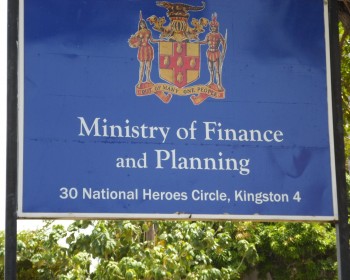
MOFInvestors snubbed the longer dated Treasury bills instruments as they stayed at the short end of the interest rate spectrum with an oversubscription for the 30-day Treasury bills but left unfilled the 3-month and 6-month instruments at today’s auction to raise $1.2 billion for the Government of Jamaica.
Treasury bills maturing Friday, 19 July 2013 attracted $499,693,300 for the $400,000,000 that was available and provided yields of 5.5 percent to a high of 7.534 percent with the average yield being 6.02245 percent to successful bidders.
The three month issue that matures on Friday, 20 September 2013 for $400,000,000 but only attracted $284,330,500 and provided yields of 5.5 percent to a high of 7.81356 percent, with the average yield being 6.75847 percent, representing an increase of nearly 15 basic points over the May issue.
The development today is in contrast to the May 24th Treasury Bill auction when both the six months and three months’ issues were heavily oversubscribed twice over. The average yield for the three months was then 6.6197 percent with a range of 5.54998 to 6.68779.
The six month issue that matures Friday, 20 December 2013 was also for $400,000,000 but attracted just $201,628,400 but provided yields of 5.99999 percent to a high of 8.28964 percent with the average yield being 7.1203 percent, resulting in an increase in rates of 68 basic points.

The six months instrument yielded between 5.75 percent and 6.8799 percent with the average being 6.4437 percent in May.

More tertiary education cost to be borne by students

The Minister of Education, The Honourable Reverend Ronald Thwaites, in a speech yesterday, indicated that Jamaica has been grossly under spending on early childhood education.

He indicated that for this financial year, the Ministry of Education has allocated 14.6% or just over $11 billion of the education’s Ministry recurrent budget to early childhood and special education. The Minister says that, “It is an investment we cannot put off due to the importance of the early years to the child’s educational development”. He says “It will mean other areas will have to ensure that the majority of that dollar is spent on delivering an effective education product”, Minister Thwaites stressed.

Reverend Thwaites indicated that the move will require sacrifices, “admittedly difficult, from parents and teachers”. It will mean that the cost of tertiary education will be more and more borne by the recipients of it rather than by the State.”

Source: MoneyMasters Ltd press release

UDC sells hotel shares for US$11.2m

The Urban Development Corporation (UDC) has concluded the sale of its 50% stake in Bloody Bay Hotel Development Limited (BBHDL) to Village Resorts Limited (VRL), which owned the other 50% of the company. VRL, in response to the UDC’s offer, had expressed its desire to exercise its pre-emptive right to acquire the UDC’s shares in BBHDL in June 2011. Cabinet approved the sale of the shares to VRL in January 2013 and the sale transaction was finalized in March with the signing of an agreement on 27 March 2013.

The gross transaction proceeds realized by the UDC was US$11.2M, which included US$9.5M for the real estate and related fixed assets, and US$1.7M representing UDC’s share of cash and other liquid assets of BBHDL at the date of the sale agreement.

BBHDL’s principal asset was Breezes Grand Resort & Spa, Negril, (formerly Grand Lido Negril) a 210 suite all-inclusive property located in Negril, Hanover.

NegrilBreezes150x150VRL secured an agreement to sell the hotel’s real property and other assets owned by BBHDL to BBNH Resorts Limited, which will further develop and expand the hotel utilizing lands acquired through the sale transaction. BBNH is an affiliate of Blue Diamond Hotels & Resorts Inc. The expansion will be in accordance with the UDC’s overall plans for the development of the area.

Blue Diamond’s portfolio of hotels also includes, in addition to Breezes Negril, the former 350-room Breezes Trelawny/Starfish Beach Hotel purchased in June 2012, which will re-open as Royalton White Sands in October 2013. With the acquisition of Breezes Negril now complete, Blue Diamond has rebranded the property as the Grand Lido Negril Resort & Spa. The same name was used by former owner SuperClubs when the company opened the resort in 1989 before rebranding it as a Breezes property in 2009.

“The Grand Lido brand has long been synonymous with top-quality accommodations, service, cuisine and beach settings. This is the first resort to be relaunched under our Grand Lido brand,” said Jordi Pelfort, managing director of Blue Diamond.

Blue Diamond is a division of the Toronto-based Sunwing Travel Group.

BOJ issues 2 new CDs

Jamaica’s Central bank has just announced the issue of two Special Variable Rate Certificates of Deposit targeted at Primary dealers to augment its liquidity management operations.  The issues which are variable rate instruments are being offered from today Wednesday, 12 June 2013 and will be opened until to Tuesday, 18 June 2013. The instruments are:

  1. A 183-day Certificate of Deposit, for a limited nominal amount of $3.0 billion. The instrument re-prices quarterly at 0.15 percentage point above the three month GOJ Treasury Bill rate existing at the start of each repricing period. The initial coupon for the first three months is 6.77 per cent per annum. This offer is extended to all Primary Dealers and commercial banks, from 12 June 2013 to 18 June 2013.
  2. A 365-day Certificate of Deposit, for an unlimited amount. The instrument re-prices quarterly at 0.23 percentage point above the three month GOJ Treasury Bill rate existing at the start of each re-pricing period. The initial coupon for the first three months is 6.85 per cent per annum. This offer is extended to all Primary Dealers and commercial banks, from 12 June 2013 to 18 June 2013.

This is the second such issue in weeks as the most recent one closed last week Friday and seemed to have delivered a fair amount of foreign currency to the central bank.

Employment rate stabilised in 2012

Data from the Statistical Institute of Jamaica (STATIN) showed that the employment remained fairly stable in 2012 compared with 2011. The labour survey done by the government body that collects economic and social data (STATIN) between December 16 to 22 last year showed that there were 1,093,200 persons employed in December last year and 181,600 unemployed, which represented an increase of 4,400 (2.5%) over the 177,200 in December 2011 with the unemployment rate of 14.2 percent a slight increase over the level of 14.1 percent in December 2011.

In December 2012, the unemployment rate was, 10.3 per cent for males and 18.9 per cent for females. In September 2012, 172,900 persons were unemployed. The December data showed that of those employed 619,300 were males and 473,900 females. This showed no significant change compared with 1,083,400 (0.9%) in December 2011. In September 2012, employment was 1,088,200.

Total labour force was 1,274,800 persons in December 2012, comprising 690,300 males and 584,500 females, an increase of 14,200 (1.1%) from 1,260,600 in December 2011. In the previous quarter, September 2012, there were 1,261,100 persons in the labour force.

EmploymentChairVacancy150x150Employment in ‘Hotels and Restaurants Services’ increased by 8,500 (11.9%) from 71,100 in December 2011 to 79,600 in December 2012. During the same period, employment in ‘Manufacturing’ declined by 9,200 (11.2%).

Employment for ‘Professionals, Senior Officials and Technicians’ increased by 21,900 persons (9.8%) between December 2011 (223,800) and December 2012 (245,700). While, employment of ‘Craft and Related Trades Workers’ fell by 10,000 (7.1%).

The unemployment rate among youths (14-24 years) was 37.0 per cent in December 2012. This represented an increase of 3.3 percentage points when compared with 33.7 per cent in December 2011. In September 2012, the rate was 35.3 per cent.

The number of persons outside the labour force decreased by 11,600 (1.5%) between December 2011 (748,800) and December 2012 (737,200).

Exports surge but trade deficit widens

The trade deficit for the first two months of this year widened despite exports growing faster than imports. The deficit was US$827 million compared to US$755 million in the similar 2012 period. Imports rose 12.5 per cent or US$127 million to US$1.148 billion from the same period in 2012. The bulk of the increase was occasioned by US$98 million rise in chemicals.

Exports | Grew faster than imports at an increase of 21.2 percent which generated US$321 million inflows, an increase of US$56 million. Mining and quarrying accounted for major part of the increase. But manufactured goods, which fell by US$23 million, prevented a steeper increase in export earnings. The decline may well be a timing difference relating to shipment of  sugar which is mostly exported in the early part of the year. Statin, who released the report, did not say which items resulted in the decline in manufactured goods. Investigations done by IC Insider confirms that in 2012 the sugar industry exported 40,000 tonnes of sugar between January and February at a value of US$37.5 million and this year only 19,130 was shipped in the same period with a value of US$16.6 million, a difference of US$21 million.

KingstonWharves150x150Imports | While imports rose, not all major categories rose as some items fell. Imports of Chemicals rose by US$178 million to US$276 million, due to higher imports of ‘Organic Chemicals’, ‘Plastic in Non Primary forms’, and ‘Medicinal and Pharmaceutical products’. “Food” increased by US$26 million to US$174 million up by 17.3 per cent. “Machinery and Transport Equipment” increased by US$5.7 million or 3.9 per cent to US$153 million this period.  “Mineral Fuels, etcetera” fell by US$89 million or 21.1 per cent and was valued at US$333 million. “Manufactured Goods” also declined by US$3.5 million or 3.5 per cent, and was valued at US$95 million down from US$99 million recorded in the comparable 2012 period.

Traditional Exports | This segment earned US$139 million during 2013 period, a decrease of 3.4 per cent, or US$5 million, due to the decline in earnings from “Manufactured Goods” which fell by 48.6 per cent from US$48 million to US$25 million. There was an increase in “Agriculture” earning US$3.4 million, 73.2 per cent above the US$2 million recorded in 2012. “Coffee” was the commodity which contributed to the overall increase in this category. “Mining and Quarrying” rose by 17.9 per cent, or US$17 million to US$111 million. Alumina earned US$90.3 million, moving up from US$74 million in the comparable 2012 period. “Bauxite” earnings grew by US$1 million or 4.4 per cent to US$21 million.

Non-traditional | Exports of non-traditional commodities earned US$170 million due largely to increases in the groups “Food’, and “Other Non Traditional Exports”.

CARICOM balance narrows sharply

The trade balance with the CARICOM region narrowed sharply during the first two months of 2013 as Jamaica imported US$41 million less goods form countries in the region compared with the previous year. Not only did imports enjoy a major decline, exports held up well and was virtually the same as the year before period with a mere marginal decrease of US$0.7 million or 6.5 percent.

The country imported US$98 million worth of goods from CARICOM, a decrease of 29.5 per cent. Expenditure on “Mineral Fuels, etcetera” fell by US$50 million or 51 percent to US$48 million. “Food” grew by US$6.9 million to US$30 million.  “Beverages & Tobacco” were valued at US6 million, roughly the same as in 2012 period, the Statin report on the trade data indicated.

Total exports to the region fell by to US$10 million during the 2013 review period. Exports of domestically produced goods accounted for US$8.8 million, down from US$9.2 million in the comparable 2012 period. Re-exports fell to US$1.5 million. The major groups of domestic exports were “Food”, valued at US$5.2 million, and “Beverages & Tobacco” worth US$1.7 million. These two sub-categories increased by 9.0 per cent and 27.4 per cent respectively.

The trade deficit with CARICOM during February 2013 fell by US$40.3 million to US$ 87.6 million. This was due to decrease importation of “Mineral Fuels, etcetera” during the current review period.

GOJ: Deficit cut

The GOJ fiscal deficit for April was cut below projection, as revenues were marginally better while expenses, mainly interest cost, were lower than forecast. The deficit that was projected at $3.46 billion ended up $2 billion better, coming in at $1.43 billion.

Revenue growth | Tax on interest delivered $806 million more than planned, but the early payment of dividends in March by some companies resulted in tax on dividends under performing by $219 million. Special consumption tax brought in $735 million more and motor vehicle licenses accounted for $162 million of the increase and tax on telephone performed better than planned by $122 million.

Rollbackthetax150x150Inflows below | There were areas that underperformed. GCT on local sales was 10 percent less reducing revenues by $666 million, surprisingly education tax was less by $144 million and betting & gaming tax brought in $188 million less than planned. Although travel tax was up 152  percent to $1.27 billion, an increase of $765 million tax on international trade was down $425 million as custom duty brought in $284 million less and Special Consumption tax on imports by $898 million. Tax on international trade may have been down as importers would most likely have brought in goods ahead of the new tax measures.

The government would have been pleased with the revenue performance which was slightly more than projected but which would have been even more had some taxpayers not taken advantage of the long time frame between increased taxes and the implementation of them to minimise their tax liability.

Spending down | Government paid $993 million less on interest or  13 percent less than originally planned and also spent less on wages $228 million and $384 million less on capital expenditure and they repaid $1.7 billion net on loans during the month.

Inflation rate down in April

Jamaicans were facing slightly lower rate of inflation in April than in the earlier months of the year as the consumer price index fell to 0.4 percent for the month, the lowest since the start of the year. This comes against increased taxation on a number of items beginning of April.

As the All Jamaica ‘All Divisions’ Consumer Price Index for April 2013 registered a 0.4 per cent rate of inflation., ‘Food and Non-Alcoholic Beverages’, the heaviest weighted division in the computation of the index, recorded an increase of 1.0 per cent. This was due mainly to the upward movement in the prices for, ‘Fruit’,’ Meat’ and ‘Bread and Cereals’. This division’s rate was however moderated by a 1.6 per cent decline in the rate for the division ‘Housing, Water, Electricity, Gas and Other Fuels’, the third heaviest weighted division in the Consumer Price Index Basket. This was the result of a reduction in the billing rate for electricity in April relative to March. All other divisions recorded increases lower than 1.0 per cent, with the exception of ‘Clothing and Footwear’, which increased by 1.1 per cent.

Consumer-Price-Index-CPI-Inflation280x150The other divisions that recorded increases were ‘Alcoholic Beverages and Tobacco’ 0.7 per cent,  ‘Furnishings Household Equipment and Routine Household Maintenance’ 0.7 per cent, ‘Health’ 0.2 per cent, ‘Transport’ 0.3 per cent, ‘Recreation and Culture’ 0.7 per cent, ‘Restaurants and Accommodation Services’ 0.4 per cent, ‘Miscellaneous Goods and Services’ 0.8 per cent,  No movement was recorded for ‘Education and ‘Communication’  .

The Statistical Institute of Jamaica collects and collates the data and compiles them into three regions. All three recorded increases; Greater Kingston Metropolitan Area (GKMA) 0.7 per cent, Other Urban Centres (OUC) and Rural Areas each  increased by 0.3 per cent.

The movement of prices reflected a calendar year-to-date increase of 3.2 percent.