 The Jamaican dollar made more gains in foreign exchange trading on Monday, closing 17 cents better to purchase one US dollar than on Friday, on a day that saw inflows surge to US$87 million for all currencies.
Sales of all currencies into Jamaica’s forex market ended at US$68.80 million, from US$101.2 million, previously. On Friday dealers purchased US$44.14 million, well below the amount bought on Monday.
Dealers sold US$57.69 million at $127.61 at the close of trading up from US$39.51 million at $127.78 on Friday. US currency purchases, amounted to US$76.03 million on Monday, at an average rate of $126.95 compared to Friday, with US$31.08 million at $126.73.
At Midday, dealers bought US$37.8 million at J$127.24 and sold US$28.57 million at J$127.64 compared to the buying of US$13.37 million at J$127.31 and selling of US$11.37 million at J$127.74 at the same time on Friday.
The selling rate for the Canadian dollar fell to J$101.44 from J$101.70 at the close on Friday. The selling rate for the British Pound slipped to J$166.91 versus J$168.55 on Friday and the euro dropped in value against the Jamaican dollar, to J$150.37 to buy the European common currency, versus J$152.45 previously.
NCB jumps TOP 10
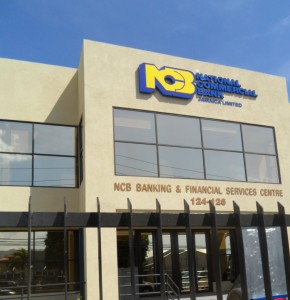
NCB Financial Group closed at a record $107 on Friday.
NCB Financial returned to the main market list last week, but with a jump of $16 to $107 during the week, it ii no longer in the top list.
Barita Investments traded up to $9 and is now out of the listing. Pulse Investments and Seprod replaced NCB and Barita as the main market of the Jamaica Stock Exchange closed at new record high on Friday, the third consecutive week of record close, driving the All Jamaica Composite Index 313,990.54.
While the main market is making new highs, with gains of 49 percent for 2017, the junior market with gains of just 12 percent at the end of the previous week is now up 17 percent as the market moved higher for the past week helped by strong results by Paramount Trading, Express Catering and increased buying of Stationery and Office Supplies that pushed the price to $5.50 to sit at 10th spot and could well be off the list by the end of the coming week.
The Junior Market list had no movement in or out in the past week. Trading in Berger Paints shares recommenced on Tuesday, after just 6.6 million units were sold by investors in response to the buyout offer by Ansa Coatings at $10.88 per share with the price closing at $14 on Friday and seemingly poised to rise further during the coming week as investors attempted to trade it at $17 which was outside the daily price limit of 30 percent above the last price. The stock has much room to climb, with the March 2018 full year’s earnings that should hit $2.30 per share.

 The main market blast well clear of resistance around 300,000 points on the all Jamaica Index and heading much higher to the next major resistance at the 360,000 points range.
At the close of Friday, the average PE ratio for the Junior Market Top stocks is at 8.1 and a PE at 7.5 for the main market TOP 10. The average PE for the overall main market trades at 13.9 and 13.8 for Junior Market, based on 2017 estimated earnings.
At the close of the week, IC Insider.com’s TOP 10 stocks now trade at an average discount of 41 percent to the average of the market for Junior Market Top stocks and 45 percent for the main market.
Market Watch| Investors should keep a keen eye for NCB, Berger, Jamaica Broiler, General Accident, Paramount Trading and Stationery and Office.
Stocks on verge of a breakout – 2014
 Stock markets can be like tsunamis, the change in the current is not seen as it moves out of site until it’s time for all to see what’s been happening. That is one reason investors are often advised to invest in stocks with good prospects long term.
There is no certainty when markets will move in one direction or another. Since profit drives stock prices, one only has to wait on the pay day from growing companies, which will surely come. What does this have to do with the local stock market? Many investors wrote off any chance that the local market would have any recovery after the spring decline of 2014 that saw the All Jamaica Composite Index falling to 76,344.27, coming against the strong demand for foreign exchange, not aware of the market’s history.
A critical point, investors in local stocks should note, is that the best times to start buying stocks is during the summer months. The Jamaican stock market bottoms and starts to move upwards in more summers than at any other time in its history, this goes back to the start of the creation of the market index, back in the early 1970s. For 2014, prices on the Jamaica stock market declined a bit from its earlier 2014 high, with several stocks hitting 52 weeks’ lows into the early summer months, with the main market hitting a low on June 23 and the junior market on August 4.
2014 developments| The average person may look to changes in the market indices to guide them in what is happening in the market. And yet others will wait until the news headline say stocks are rising. The problem with this approach is that indices movements cloud what may be important shifts in values and prices and when the main news highlights what is happening in the market much of the gains are gone, making it riskier to invest. From the end of August to September 19th in 2014, the all Jamaica index rose by 1 percent while for August it remained flat. The Junior Market index rose 3 percent towards the end of September, but was flat for August. But something else was happening that bode well for continuation of an upward move of the market, more importantly, upward move for some stock prices. In September up the 19th the all Jamaica index rose on 53 percent of trading days, while for the junior market it was 60 percent and with the month not ended the ratio could improve. In August the ratios are 42 percent and 48 percent respectively. 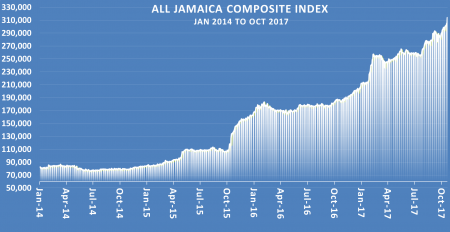 The advance decline ratio tells a far better story than the indices movements. The main market had only 7 days when the advance decline ratio was negative and so far for September, that number is just 4 with 7 trading days to go before the month ends.
Interest Rates| Rising interest rates drive money out of stocks into other investments, the reverse is also true falling rates drive money into stocks to position for better returns in the stock market. Interest rates on government Treasury bills have been declining since May 2014 and flows in the forex market are buoyant with the local dollar remaining stable. Technically, the main market is seeing the short term moving average on the verge of crossing the medium term moving average, a bullish sign. Importantly, many listed companies have posted some attractive results for 2014 that is supportive of an upward push in their stock price. These are positives that will help the market.
Few investors picked up the above signals, it was not until April 2015, when newspaper reports of an investment forum was reported that the wider public became aware of the bull market that had its genesis from 2014 and was up 21 percent to the end of March from the June 2014 low.
The above was posted on September 23, 2014 and is reproduced with slight modifications.
Dealers sold C$76m on Friday
 The Jamaican dollar made modest gains In the foreign exchange trading on Friday to close 3 cents better to purchase one US dollar than on Thursday on a day that saw C$76,397,101 being sold (US$60,805,327 equivalent) at J$101.70 versus J$102.76 on Thursday.
Dealers sold US$39.51 million at $127.78 at the close of trading up from US$33.81 million at $127.81 on Thursday. US currency purchases, amounted to just US$31.08 million on Friday, at an average rate of $126.73 compared to Thursday, with US$48.97 million at $127.99.
At Midday, dealers bought US$13,372,228 at J$127.31 and sold US$11,367,821 at J$127.74 compared to the selling rate of J$127.77 at midday on Thursday.
 Inflows of all currencies into Jamaica’s forex market fell to US$44.14million, from US$58.03 million on Thursday while dealers sold US$101.2 million versus US$40.33 million, previously.
The selling rate for the British Pound rose to J$168.55 versus J$167.64 on Thursday and the euro rose in value against the Jamaican dollar, to J$152.45 to buy the European common currency, versus J$151.94 previously.
FX market nets US$18m – Thursday
In the foreign exchange trading on Thursday, dealers bought US$18 more than they sold as the selling rate slipped again, with it taking $127.81 to buy one US dollar.
Dealers sold US$33.81 million at $127.81 at the close of trading up from US$48.45 million at $127.90 on Wednesday. US currency purchases, amounted to US$48.97 million on Thursday, at an average rate of $126.99 compared to Wednesday, with US$45.61 million at $127.96.
At midday, the selling rate of the US dollar was J$127.77 with US$5,243,960 sold compared to $127.85, with US$12 million being sold, on Wednesday at midday.
Inflows of all currencies into Jamaica’s forex market rose to US$58.03 million, from US$54.05 million on Wednesday while dealers sold US$40.33 million versus US$55.19 million, previously.
The selling rate for the Canadian dollar rose to J$102.76 from J$102.59 at the close on Wednesday. The British Pound inched down to J$167.76 for buying the British currency versus J$168.24 on Wednesday and the euro rose in value against the Jamaican dollar, to J$151.94 to buy the European common currency, versus J$150.94 previously.
J$ stays below $128 to US$
The Jamaica dollar continued to trade below the $128 mark to buy one US dollar, in foreign exchange trading on Wednesday, for the second time since the close of 2016.
Dealers sold US$48.45 million at $127.90 at the close of trading up from US$46.05 on Tuesday at a rate of $127.97. US currency purchases, amounted to US$45.61 million on Wednesday, at an average rate of $126.96 compared to Tuesday with US$48.11 million at $127.01.
At Midday, the selling rate of the US dollar was $127.85, with US$12 million being sold, versus $127.78 on Tuesday midday with US$17.7 million being sold. In BOJ foreign exchange auction, 37 bids went after $10 million on offer, with bids totaling US$19.8 million, leading to the average rate falling to $127.75. The highest bid was $128.05 to buy $1 million and the lowest $125.05, to buy US$800,000.
Inflows of all currencies into Jamaica’s forex market fell to US$54.05 million, from US$58.13 million on Tuesday while dealers sold US$55.19 million versus US$52.98 million, previously.
The selling rate for the Canadian dollar fell to J$102.59 from J$103.78 at the close on Tuesday. The British Pound inched down to J$168.24 for buying the British currency versus J$168.87 on Tuesday and the euro rose in value against the Jamaican dollar, to J$150.94 to buy the European common currency, versus J$151.61 previously.
J$ drops below $128 to US$
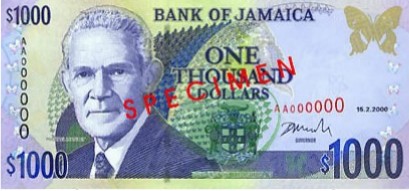 The Jamaica dollar slipped below $128 to purchase one US dollar in foreign exchange trading on Tuesday for the first time since 2016.
At Midday, the selling rate of the US dollar dipped as low as $127.78, with US$17.7 million being sold but clawed its way to $127.97 at the close of trading after dealers sold US$46.05 million, up from US$43.84 on Friday at a $128.22. US currency purchases, accounted for US$48.11 million on Tuesday at an average rate of $127.01 compared to Friday at US$33.81 million at $127.23.
Inflows of all currencies into Jamaica’s forex market fell to US$58.13 million on Tuesday, from US$48.73 million on Friday while Dealers sold US$52.98 million versus US$56.08 million, previously.
The selling rate for the Canadian dollar fell to J$102.78 from J$103.15 at the close on Friday. The British Pound inched up to J$168.87 for buying the British currency versus J$168.83 on Friday and the euro rose in value against the Jamaican dollar, to J$151.61 to buy the European common currency, versus J$150.87 previously.
Access & NCB in TOP 10
NCB Financial Group enters TOP 10
The main market of the Jamaica Stock Exchange closed at new record high on Friday, the seond week in a row that it doing so and in the process the all Jamaica Composite Index broke the 300,000 mark for the first time.
While the main market is making new highs, with gains of 43 percent for 2017, the junior market with gains of 30 percent at its peak this year, is now up just 12 percent for the year to date. Access Financial returned to the Junior Market list and NCB Financial to the main market list even as the latter price moved back to $91 at the end of the week and with just 33,603 units being offered for sale.
Suspension of the trading in Berger Paints shares is expected lifted on Tuesday, October 17. At the time of this report, no information was available on the level of take up of the buyout offer for the minority of the company’s shares by Ansa Coatings. The stock that traded at $11.25 when trading was suspended, should climb with the March 2018 full year’s earnings should hit $2.30 per share.

 Investors continue to switch attention from Junior Market, to main market stocks, with the latter having pierced resistance around 300,000 points on the all Jamaica Composite Index could now be heading much higher as it moves on to the next major resistance at 360,000 point range on or before the end of the year.
At the close of Friday, the average PE ratio for the Junior Market Top stocks is at 7.9 and a PE at 7.1 for the main market TOP 10. The average PE for the overall main market trades at 13.5 and 13.1 for Junior Market, based on 2017 estimated earnings.
At the close of the week, IC Insider.com’s TOP 10 stocks now trade at an average discount of 40 percent to the average of the market for Junior Market Top stocks and it remains at 47 percent for the main market.
J$ rate lower than at 2016 year-end
 Jamaica’s foreign exchange dealers sold US$33 million more US dollars than they purchased this week, adding to the US$35.5 million net sales in the prior week.
The selling pressured, the US dollar and resulted in a revaluation of the local currency to $128.22 for purchase of US$1, by end users, down from $129.09 at the close of the first week in October. The rate is now lower than for the last trading day of 2016 when it ended at J$128.44 to the US dollar.
Inflows of all currencies into Jamaica’s forex market fell to US$48.73 million on Friday, from US$51.81 million on Thursday while Dealers sold US$56.08 million versus US$56.89 million, previously.
 US currency purchases, accounted for US$33.81 million on Friday at an average rate of $127.23 compared to Thursday at US$36.57 million at $127.58. Dealers sold US$43.84 million at an average rate of J$128.22 versus J$128.41 for US$42.52 million, previously.
The selling rate for the Canadian dollar fell to J$103.15 from J$103.36 at the close on Thursday. The British Pound declined to J$168.83 for buying the British currency versus J$169.33 on Thursday and the euro slipped in value against the Jamaican dollar, to J$150.87 to buy the European common currency, versus J$151.66 previously.
US$ sell off continues – Thursday
 The recent selloff of US dollars continued in the Jamaican forex market on Thursday, with dealers on average in buying the US dollar for 31 cents lower than on Wednesday while the rate they sold funds at fell 19 cents from Wednesday and is down $1.16 from last week’s peak.
Inflows of all currencies into Jamaica’s forex market fell to US$51.81 million on Thursday, from US$53.87 million on Wednesday. Dealers sold US$56.89 million versus US$52.24 million, previously.
US currency purchases, accounted for US$36.57 million on Thursday at an average rate of $127.58 compared to Wednesday at US$47.72 million at $127.89. Dealers sold US$42.52 million at an average rate of J$128.41 versus J$128.58 for US$47.28 million previously. The selling rate for the US dollar is coming off from a peak of $131.31 on September 15, with the Jamaican dollar recovering 2 percent of its value since.
The selling rate for the Canadian dollar fell to J$103.36 from J$103.43 at the close on Wednesday. The British Pound climbed to J$169.33 for buying the British currency versus J$168.53 on Wednesday and the euro slipped in value against the Jamaican dollar, to J$151.66 to buy the European common currency, versus J$153.48 previously.