Pulse Investments cans Rights Issue

Kingsley Cooper Chairman of Pulse

Pulse Investments (PULS) has canned their previously proposed rights issue of ordinary shares, instead the company has resorted to bonds financing, the preferred approached minority shareholders had recommended at the 2016 annual General meeting.
The proposed debt financing did not find favour with the directors hence their attempt to seek equity funding. According a release of the company, “the Board decided that the Company will not pursue the previously announced rights issue, as it has now secured funding from a related party as well as a bond from NCB Capital Markets. The Directors decided, on reflection, that the funding now secured, is a less expensive alternative for the company than the rights issue would have been. Further, no shareholders run the risk of dilution of their Pulse shareholding as a result of the current course of action.”
PULS further states that it wishes to clearly indicate that the rights issue, which would have been arranged and brokered by NCB Capital Markets, had been approved, with sufficient commitments made to ensure that the issue would have been fully subscribed.
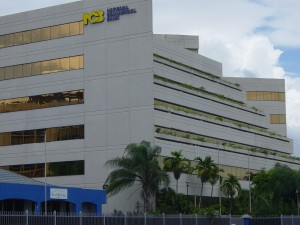
Can NCB ignore compelling Guardian buy?

NCB Financial acquisition of 29.99 percent stake in Guardian Holdings cost $28 billion 2016. Make it the largest shareholder in an attempt to return it to majority ownership to which it previously belong.
If NCB were to increase their holdings to more than 50 percent it would strengthen their hands in greater integration of the group with the focus on cost reduction and income enhancement. Two areas would be, a possible merger of the two general insurance companies that would increase the muscle in the market and cut out lots of duplicated cost, the life insurance could also generate savings and increase potential income. An on the capital market side there is much to be gained with an increased financial strength that could become a real powerhouse in raising and providing capital within the region. But there at least one more compelling reason, Guardian’s profit for the six months to June is 83 Trinidad cents per share and is ahead of the 70 cents earned in 2016, earnings for 2018 should end up around TT$1.90 up from $1.61 last year. NCB currently trades in

Guardian Holdings closed at a 52 weeks’ high of $16.75 on TTSE..

Jamaica at a PE of 12 times 2017 earnings while Guardian earnings is below 7, any acquisition around the current price would be a huge steal for NCB and would be a big boost to the growth in 2018 earnings and by extension the stock price. That is far too attractive a deal for NCB to forego at this time. Raising the shareholder to 75 percent would create increased profits around J$2 billion and add about $12 to the stock price and that is without any group synergies.
At the time the acquisition, some 36 percent of the company was available for sale not including International Financial Corporation block which NCB acquired. Had they gone for the full amount, it would have triggered the takeover rule of the Trinidad and Tobago Stock Exchange and would have required the group to have much more funds available, to swallow a much larger amount. A year and half having elapsed since that acquisition NCB has amassed more of its own funds by way of retained earnings and lately, from a floatation of bonds on the local market that initially raised $18 billion, the equivalent of US$138 million in September and a further attempt to raise US$105 million at attractive interest rates.
The funds raised was said to be used for regional and local expansion and acquisitions by the group. Acquisition of more Guardian shares seems to most logical more, along with more JMMB Group shares.
market capital is TT$3,538,793,786, a 20 percent stake that would take NCB’s stake to just under 50 percent, could cost around US$105 million, an amount that is well below the amounts raised recently and with the amounts they went to the market for giving them the financial muscle to acquire an additional 45 percent at current prices, that could take the ownership to 75 percent.
The case of acquiring JMB shares is compelling NCB with 26.3 percent of the issued ordinary shares is by far the largest shareholder with next being JMMB ESOP with 9.6 percent but Trinidad’s Colonial Life Insurance with a block of 6.3 percent can no longer be seen as long term holder and these shares may well become available for sale which NCB maybe best suited to acquire. The reality is that the Duncan’s family no longer holds a commanding interest in the group and based on the top 10 listing may just be able to muster votes of about 23 percent.

Appalling corporate action

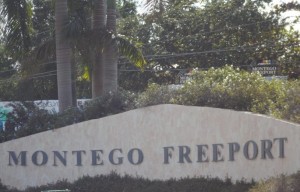
Monetgo Freeport was previously listed on the Jamaica Stock Exchange but dumb politically appointed directors made a stupid decision to have the company delisted on the basis that it would save money and the assets would be sold off and the company liquidated.
Several years have so far elapsed and the company is yet to be wound up but the more than 1,600 shareholders cannot trade their shares as there is no organized market to do so, thanks to the poor decision made by former board members, but the current board don’t seem to be leading the company any better than the previous one.
The company has $327 million worth of property being held for sale so it will be some time for the winding up to take place. Amounts held on deposit for the purchase of property is $399 million, backed by funds held in escrow. The current board rather than pay more dividend from the excess cash the company holds, is recommending that no payment be made, another poor decision. The funds have not been invested for maximum returns, as they just sit in bank deposits earning under 6 percent interest per annum and now even less with fall in interest rates, being paid on deposits. That makes no sense, when there are other assets that could enhance shareholder’s value.
Freeport should be returned to the Stock Exchange with a new mandate and UDC could cash out their shares by the company buying them back.
The financial statement up to March this year, shows profit of $10.5 million down from $45 million in 2016 with income falling in 2017 to $40 million from $92 million in 2016.
The question to be answered is why would a company that is virtually inactive need to have 10 directors that is another indication of poor management. There seems no need to be more than 6 but the company needs to have management refocus their attention in a different direction than they are current on.

Tough economics hit West Indian Tobacco

Tough economic conditions, flowing from an ongoing recession in Trinidad, together with increased Excise and Corporation Tax, the business environment resulted in significant changes in consumption patterns adversely affecting revenue of West Indian Tobacco.

The situation seems to have worsened with illicit cigarettes in the country. According to the Chairman, Anthony Phillip “the Company continues to engage with relevant authorities and stakeholders on the issue of the increased presence of suspected illicit products in the market which has negatively affected our business.”
Against this backdrop, West Indian Tobacco has recorded profit before taxation of $398 million and net profit of $276 million for the nine months to September, down from $373 million in 2016. Revenues fell from $891 million to $787 million but revenues inched just higher in the quarter to $274 million from $272 million in 2016 and revenues net of excise tax was slightly down for the quarter.
Profit after tax for the September quarter fell from $123 million to $97 with tax increasing to $44 million from $43 million in 2016.
The Company continues to proactively respond to the evolving market conditions with ongoing reviews of its Brand Portfolio, Trade Marketing, and Distribution strategies, as well as careful cost management across its operation.
The Board approved the payment of a third interim dividend of $1.14 per ordinary share payable on 24 November 2017, the payment is down compared to $1.44 paid in 2016.
Earnings per share came out at $1.16 for the quarter compared to $1.46 for the similar period in 2016 and for the nine months period $3.27 versus $4.42 in 2016 and should end around $4.75 for the full year giving it a PE ratio of 26 and should result in more decline for the stock. In 2016, earnings amounted to $6.12 per share.
The stock that traded at $127.01 earlier in the year is down to $124.96 on the Trinidad and Tobago Stock Exchange.

Knutsford Express revving up

One of Knutsford Express buses.

Jamaica’s intra island transport company, Knutsford Express, is enjoying extraordinary times, with a sharp increase in revenues and profits but the company’s management is not sitting on their laurels as they actively seek areas for future growth and profits.
In the latest quarter to August, revenues jumped a strong 37 percent, to $237 million and spawned a 57 percent rise in profit of $57 million. Of interest is the continued growth, on top of previous year’s increases. For while revenues in the August 2016 quarter rose 21 percent with flat profit, by the second quarter revenues climbed 37 percent over the 2015 levels, to $176 million and profit rose 19 percent to $30 million.
Revenues rose 33 percent for the third quarter to $203 million and profit almost doubled to $53.7 million, thanks partially to an $8.5 million gain on sale of fixed assets. Excluding the one off gain, profit would be up 63 percent for the quarter. Expenses increased 25 percent, quite a bit slower than revenues, helping in the growth in profit. Knutsford, unfortunately does not break out direct operating expenses from administration cost but data shows that certain direct cost not counting labour cost, to be around a third of revenues. Increased revenues would have added close to 50 percent of the increase in overall cost.

Knutsford’s New Kingston depot

By the end of 2017 fiscal year revenues climbed 29 percent over 2016 and profit by 28 percent, just below the 35 percent increase for the nine months to February. Operating revenues for the last quarter of the just concluded fiscal year was in line with the amount generated in the third quarter.
When the company went public, it had 54 employees in 2013, up from 47 in the previous year, climbing to 100 by May 2016, and remaining there to May this year, resulting in some economies of scale.
IC Insider.com is forecasting revenues to pass the $1 billion mark for the first time, by the end of the fiscal year with profits ended up around $280 million or 50 cents per share, with the next fiscal year’s earnings hitting 90 cents per share. The stock trades on the Junior Market of the Jamaica Stock Exchange around $15 with a PE ratio of 27 and 16 times 2019 earnings versus 14 for the market currently.
Knutsford generated $73 million in cash flow for the quarter and expended $69 million on the acquisition of fixed assets to end up with $85 million in cash and bank balances and investments $92 million. The company owes $55 million in loans and boast net worth of $539 million.

Big jump in Paramount profit

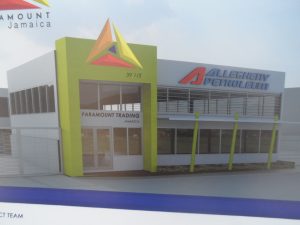
Paramount new designed offices.

Junior Market listed Paramount Trading, enjoyed a big turn-around in profit for the first quarter to August this year, with an increase of 126 percent, to $34 million from a 31 percent increase in revenues to $331 million.
Importantly, Paramount incurred exceptional expenses in the first quarter, last year, as the company celebrated its 25 anniversary, IC Insider.com estimates the cost to be around $20 million, excluding this one off cost, profit would have been flat, in both periods.
Administrative and other expenses jumped from $44 million to $62.7 million, but selling and marketing cost dropped from $24 million to $2.8 million. Direct cost rose 35 percent, reducing gross profit margin with gross profit rising slower than the increase in revenues, at 23 percent to reach $101 million.
Earnings per share amounts to 2.2 cents. IC Insider.com places full year’s earnings at 19 cents and for the 2019 fiscal year to May 30 cents with the coming on stream of the joint venture lubricant plant.
The directors’ report stated that they have “an optimistic outlook for the rest of the year and is very excited by the opportunities that will be realized. The construction of the blending plant and laboratory, in conjunction with Alllegheny Petroleum is slated to be complete during the next quarter.”
The balance sheet shows net current assets of US$463 million, including inventories of $338 million, receivables of $283 million and cash funds and investments at $97 million. Borrowings are at $55 million up from only $16 million in August 2016.
The stock currently trades at a PE ratio of 15 with the price at $2.90 on the Junior Market against the market average of 14 and seems to be line with the market. What is true, is the nimbleness of management to identify new income generated opportunities that makes staying close to the stock potentially profitable.

Profit surges 137% at Express Catering

Starbucks one of the brands Express Catering will sell at the Montego Bay Airport.

Recent Junior Market listed Express Catering, enjoyed a big surge in profit of 137 percent to US$834,447 for the quarter to August, this year.
With management fees removed and revenues jumping 9.7 percent, in line with increased visitor arrivals to Jamaica, Express Catering, operators of a series of restaurants within the Montego Bay’s Sangster International Airport good performance, came from revenues of US$3.8 million for the quarter.
The removal of management fees saw administrative and other expenses falling from US$2 million to US$1.7 million, but gross profit rose by US$157,000 as cost of sales grew faster than the top line, at 21 percent thus reducing profit margin. Management in their commentary on the results states that “they have since raised prices to compensate for increased input cost.” Express reported earnings per share of 0.051 US cents. IC Insider.com places full year’s earnings at 26 Jamaican cents and that for 2019 at 40 Jamaican cents.
“The addition of the Starbucks Coffee to the offerings in the airport is expected to be completed during the third quarter. Work as already commenced on this initiative and will see 3 locations within the Airport,” the directors’ report stated.
The balance sheet shows US$4.56 million due from related party an increase from $3.64 million at the end of May and cash funds at $497,000.
The stock currently trades at a PE ratio of 19 with the price at $4.95 against the market average of 13.6.

Carib Cement Q3 profit $748m

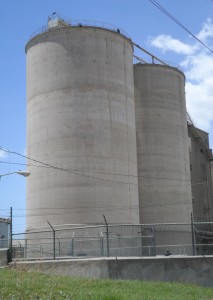
Carib Cement silos.

The Jamaican based Caribbean Cement, sole producers of cement in the country, is reporting profit of $748 million after taxation of $99 million for the September quarter.
Profits arose from revenues of $4.18 billion, up from sales of $3.68 billion in 2016, due mainly to a 15 percent increase in volume sales locally. The result compares to a loss of $81 million in the similar quarter last year. For the nine months to September, profit after tax ends at $1.8 billion versus $973 million in 2016 and well ahead of the $1.3 million reported for the 12 months to December 2016. Revenues for the nine months, amounted to $12.26 billion, up from $12 billion in 2016.
Cost were mostly kept within the levels incurred in 2016 except for a sharp increase in fuel and electricity cost that jumped from $530 million to $759 million in the quarter and moved from $1.87 billion to $2.2 billion for the nine months, but repairs and maintenance fell to $254 million from $358 million in the 2016 third quarter but was slightly down for the nine months at $650 million.
Cement ended the quarter with cash at $1.6 billion after $1.57 billion was expended on additional fixed assets.
Earnings per share for the quarter amounted to 88 cents and $2.13 for the nine months, with the full year looking to exceed $3. Importantly, the results should be looked at not so much for the out turn for 2017, but what it means for full year earnings in 2018. IC Insider.com expects demand for cement to continue to rise as the economy gathers steam and the company renegotiates the leasing arrangement for equipment that is expected to lower the cost in that area going forward, pushing earnings well over $4 per share. The stock closed on the Jamaica Stock Exchange on Wednesday at $29.01.

Is war about to break out for SVL board room?

War seems about to break out over board room composition at Supreme Ventures, as the largest block of shares in the company, recently underwent a major ownership change.
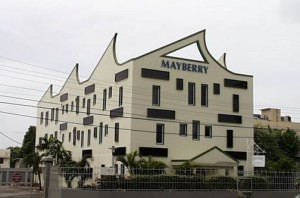
Accordingly, the current board issued a release on the matter today. The board noted the recent reports of the $2.9 billion block share transaction buy out of Supreme Ventures Limited (SVL), by Zodiac International Investments & Holdings Limited and Mayberry Investments.
The company confirms that it has received correspondence from Mayberry West Indies Limited for an Extraordinary General Meeting (EGM) to pass a resolution to remove seven current members of the SVL Board.
The current list of Directors include SVL’s Chairman, Paul Hoo, as well as Peter Chin, Richard Foreman, John Graham, Steven Hudson, Ian Moore and James Morrison.

Mayberry crossed 40m C&W shares.

The letter, sent jointly under the signatures of Mayberry West Indies’, Castries, St Lucia, Bamboo Holdings Limited and Konrad Mark Berry, also outlines the intent to appoint seven (7) new Directors to the SVL Board, namely Christopher Berry, Gary Peart, Nicholas Mouttet, David McConnell, Peter McConnell, Ansel Howell and Lance Hylton.
In acknowledging the developments, Chairman Paul Hoo stated, “We have been made aware of the intent of major shareholders to have the EGM and effect some changes at the Board level. The discussions are ongoing, and as such I cannot comment too much at this time. What we can definitively say is that the SVL Board holds the interest of its shareholders as paramount, and even as we deal with the issues arising out of these developments, we are reiterating our continued commitment to exercise our fiduciary responsibility to all shareholders, as well as to protect the image and reputation of our company and our committed team.”
According to SVL President & CEO, Ann-Dawn Young Sang, “Our dedicated team continues to remain focused to build and grow our great company.”
There have been recent reports in the media of the significant shareholder transactions in the last couple of weeks. Based on these transactions, the ownership interest of SVL’s major shareholder, Zodiac Caribbean Ventures Limited – former name, Intralot Caribbean Ventures Limited – (ICVL)) has been reduced from 49.896 percent to 38.3245 percent. ICVL will now be fully owned by Zodiac International Investments & Holdings Limited a company registered in St. Lucia. Mayberry is said to have recently picked up a block of 300 million units or around 11.375 percent of the company’s shares.

New record close of 304,331 for JSE

Trading on the Main Market of the Jamaica Stock Exchange finished at another record close on Wednesday, with 23 securities changing hands, 10 advanced, 4 declined and 6 traded firm.
Sagicor Group traded at an intraday high of $42 by fell back to close at $38.50, with 385,734 shares and Berger Paints traded 72,142 shares in closing at $11.60 even as there is no official information as to the take up of offer to buy minority shares by Ansa Coatings.
The JSE All Jamaican Composite Index climbed 1,832.93 points to a record close of 304,331.28 and the JSE Index advanced by 1,670.01 points to close at 277,280.22. Trading ended with 2,338,963 units valued at $40,714,751 compared to 3,286,324 units valued at $72,430,544 on Tuesday. In the US dollar market, trading accounted for 484,226 units valued at US$124,982 as 4 securities changed hands of which 2 gained, resulting in the JSE USD Equities Index advancing by 1.15 points to close at 184.81.
Trading ended with an average of 101,694 units for an average of $1,770,207 in contrast to 142,884 units for an average of $3,149,154 on Tuesday. The average volume and value for the month to date amounts to 1,919,815 units valued at $26,465,745 and previously, 2,085,099 units valued at an average of $28,710,794. In contrast, September closed with average of 283,480 units at $3,630,990 for each security traded.
IC bid-offer Indicator| At the end of trading in the main and US dollar markets, the Investor’s Choice bid-offer indicator reading shows 5 stocks with bids higher than their last selling prices and 3 with lower offers.