
Remittances into Jamaica continue to grow as the international economy continues to recover from the depression suffered since 2008. Jamaica’s increase of 4.4 percent for the first three months of 2014, is one of the lowest in the region of countries with large remittance inflows. Mexico is up 13 percent, El Salvador 8 percent and Guatemala 9 percent. Most likely, exchange instability affected Jamaica’s numbers negatively.
Net remittances, increased by US$11 million to US$172 million for March 2014, or 6.7 percent over March last year. Gross inflows were US$188 million, an increase of US$9 million. Net remittances for the three months to March amounted to US$461 million, an increase of US$30 million or 6.9 percent. For the three months, total remittance inflows were US$514 million, an increase of US$22 million or 4.4 percent.
Inflows were higher in each of the three months for the year, so far. Total remittance outflows declined in the quarter versus 2013, from US$61 down to US$53. The USA accounted for 61 percent of inflows and the UK 16 percent, in the quarter.
Jamaica remittances grow but lag region
Big improvement in balance of payments
 There is a major improvement in Jamaica’s Current Account deficit for the March 2014 quarter, according to a report out of Bank of Jamaica. Lower imports partially offset by lower exports and improved service inflows led to an improvement of US$301 million the deficit of US$401 million in the March 2013 quarter, resulting in a deficit of US$101 million.
“The outturn for the 2014 first quarter is the second lowest current account deficit recorded since 2007” the country’s central bank states. The improvement in the Goods Account was due to a significant decline in imports which was partially offset by decline in exports. The decline in Imports of US$281 million was primarily driven by a US$172 million and a US$133 million decline in chemicals and mineral fuels imports, respectively. The decrease in exports was primarily attributable to a US$86 million and a US$31 million decrease in chemical and crude material exports, respectively, partially offset by an increase in the exports of manufactured goods of US$21 million.
An increase of US$31 million to US$270 million in the balance on the Services sub-account resulted primarily from improvements in transportation and travel services of US$33 million and US$18 million, respectively. The improvement in transportation resulted from reduced freight costs associated with the reduced imports, while the increases in travel receipts occurred due to a 3.3 in visitor arrivals.
Businesses more optimistic
Perception of in the most recent survey done in May of this year showed improvement in present business conditions by the business sector, compared to the previous survey done in April. The Bank of Jamaica commissioned survey, shows the index moving from 95.8 in April to 102.5 in May. The results are well off the 158 achieved in December 2011 or 135 reached in March 2013.
Expectations about future business conditions, however, were largely unchanged. Of note, both indices remained below the levels recorded in Fiscal year 2011/12, nonetheless, the perceptions of present and future business conditions have displayed a general upward trend since the April 2013 survey.
Statin confirms 1.6% growth in Q1
 The Jamaican economy grew by 1.6 percent in the first quarter of this year over the similar 2013 period but it is lower than the growth in the December quarter and only just moves the country ahead of where it was in 2012 as the latest growth figure places the country at 0.50 percent ahead of the first quarter of 2012. This is the third straight quarter that the economy is said to have grown. Statin previously confirmed that the Jamaican economy grew 1.8 percent in last year’s fourth quarter, 0.5 percent in the third quarter of 2013 when compared to the similar quarter of 2012 versus a decline of 0.1 per cent in the second quarter and declined by 1.3 per cent in the first quarter of 2013.
In contributing the overall growth in 2014, Goods producing industries grew by 5.5 percent and Services industries by 0.3 percent. Agriculture, Forestry & Fishing grew by 17.7 percent, Mining & Quarrying 8.5 percent and Construction 1.2 percent. Manufacture declined by 1.2 percent.
“Higher output levels in Construction was impacted largely by continued expansion in hotels and increased spending on work under the Jamaica Development Infrastructure programme”, Statin stated.
“Higher output was recorded for all industries within the Service sector with the exception of the Government Services which declined by 0.2 percent. Higher output was recorded for Transport, Storage & Communication (0.7 percent), Real Estate, Renting and Business Activities (0.6 percent), Electricity & Water Supply (0.5 percent), Other Services (0.4 percent), Hotels & Restaurants and Finance & Insurance Services (0.2 percent) and Wholesale & Retail Trade; Repairs; Installation of Machinery & Equipment grew by (0.1 percent)”, the report stated.
Scotia Group trades at $21.70
Scotia Group traded as high as $21.70 in early trading this morning as more than 1 million shares traded. Stockbroker, Scotia Investment bought the bulk of the amount that traded at $21.70 some of which were crosses. The price drifted down to $19.80 with 2,500 units, there was 100,000 units on offer at $19.80. The opened trading at $19.43. The trades helped push the all Jamaican index up by 1,658 points to 79,177.73 at 10.12am.
other noticeable trades were 500,000 Sagicor Group shares at $8.80 and Pan Jam 100,000 units, at $49.
Lasco Distributors prevails against Pfizer
 Lasco Distributors has prevails against Pfizer in a law suit that Pfizer brought against Lasco. The local company had won the case in the local courts but Pfizer appealed the judgement to the Privy Council in 2012.
Lasco Distributors has now advised, that the Privy Council has dismissed the Appeal by Pfizer Limited and has affirmed the decision of the Court of Appeal.
“Lasco Distributors Limited’s (LDL) objection to grant Pfizer Limited a stay of the judgment of the Court was accepted by the Court of Appeal. This means that LDL is permitted to continue to trade in the product Las Amlodipine which it had been barred from distributing and to proceed to have the Supreme Court assess the damages caused by the issue of the injunction and to tax the cost payable by Pfizer,” the company reported in 2012.
Lasco ceased selling Las Amlodipine by an injunction granted in March, 2005, however, Lasco contended that under the provisions of the Patent Act of Jamaica, the Jamaican Patent was not in force when the Company started to market its own product, Las Amlodipine since an earlier patent No. 18266 granted to Pfizer in Egypt had expired in March 1997.
The matter was heard in the courts which found that the case for Pfizer for an infringement of Jamaican Patent No. 3247 failed. The court gave judgment for the Company with costs to be agreed or taxed and directed that there should be an enquiry as to damages suffered by the Company as a result of the interlocutory injunction granted to Pfizer under their undertaking in damages.
It is the expectation of the Company, based on legal advice it has received, that its lost sales of the product to date (estimated to be $400 million) are likely to be recovered in the event that it succeeds in this matter but it is difficult to quantify the amount of damages that could potentially be awarded to the Company as they will continue to accrue until the matter is decided. With the passage of time, the cost of money in Jamaica since 2005, lost sales from 2005 until they were permitted to start selling in 2012 and legal cost involved in the case Lasco distributors should end up with well over $1 billion from the case.
Huge change in Jamaica’s CARICOM non-fuel trade
 While imports from CARICOM for the first quarter of 2014 rose over the similar period in 2013, the figures mask the huge progress Jamaica made in in the non-fuel trade balance with Caricom partners. The value of nonfuel imports from CARICOM fell in the first three months of 2014 while exports jumped, albeit from a low level. Imports fell to US$64 million from US$73 million in the comparable 2013 period and exports jumped 63 percent or $11 million to US$29 million, a $20 million improvement in the trade balance excluding fuel. Manufactured Goods valued at US$13.6 million was the major contributor to this increase in exports. Food valued at US$7.6 million, Beverages & Tobacco at US$2.2 million and Miscellaneous Manufactured Articles at US$1.8 million constituted the major commodity groups exported to CARICOM, the report from the Statistical institute of Jamaica stated.
Notwithstanding the improvement in the non-fuel imports, total mported items from Caricom rose to US$207 million for the quarter, US$44 million more than the US$163 million recorded for 2013.
Imports of Mineral Fuels, increased during the current 2014 period to US$143 million increasing by US$53 million moving from US$90 million.
Columbia will win 2014 world cup
 The 2014 world cup will end up in South America, but it won’t go to Jamaicans beloved Brazil or their second love Argentina.
 Jamaican dream of seeing their first and the second choice teams win the world cup football seems set to be shattered unless something miraculous happens. Neither of these teams have found the critical element to score enough goals and even if they do, there are serious questions about their ability to defend their goal. Brazil scored 9 goals so far and conceded 3, while Argentina scored 7 and gave up 3, that equates to 1 net goal per match for Argentina and 1½ for Brazil. Holland scored 12 goals and gave up 4 for a net score of two per match, France scored 10 goals for and two against for 1½ per match in their favour and Germany had a net goal score of 5 with 8 for and 3 against. Columbia scored 11 with 2 against, for just over two per match. Costa Rica the giant killers scored 5 with 2 against. IC Insider that forecasted all the winners in the quarter finals is now forecasting that the 2014 world cup winner will be Columbia.
Costa Rica should bow up when they play Holland, thus ending their dream run. Columbia will beat Brazil and Belgium will beat Argentina, France will put Germany out to pasture.
Wipe out of Ja fiscal deficit seems likely
 With two months out of the 2014/15 fiscal year reported on, the Peter Phillips led Ministry of Finance seems set to again report a wipe out of the fiscal deficit at the end of the fiscal year that ends in March 2015. The budget had suggested a deficit of just over $11 billion. So far there is a $5 billion improvement in the deficit to May with a $2.1 billion improvement in revenues and a $2.9 billion cut in expenditure with capital expenditure accounting for $1.5 billion of the expenditure reduction,but it would be the buoyancy of the revenues that would have been pleasing to the Minister. The country in the past has seen impressive performances in the early months of the financial year only to be face with cuts in expenditure later, as revenues failed to meet the targets set. It will not be clear if the current revenue trend continues, the next few months to come will paint a clearer picture of the likely outturn.
Total revenues which were projected at $52 billion ended at $54 billion and expenditure of $69.6 billion came in at $66.7 billion instead. $752 million less was spent on the wage bill and $676 on programs. Tax revenues brought in $1.87 billion more than projected. The deficit ended at $12.6 billion versus $17.6 billion projected.
Imports drop, exports drop
Devaluation of the local currency since the start of 2013 that should be helping move exports upwards had no visible impact on overall exports of goods in the first quarter of this year compared with 2013, it however, could be impacting imports somewhat as imports have fallen partially as a result. Jamaica imported US$1.412 billion </a>of goods down from US$1.647 billion imported in the January to March quarter last year, representing a reduction of US$235 million or 14.3 percent.
Exports on the other hand came in at US$358 million, down from US$469 million in the 2013 quarter. The decrease in exports was US$111 million or 23.6 percent and is due mainly to a fall in Alumina exports which fell from US$236 million in the comparable 2013 period to US$105 million this year. The merchandise trade deficit for the quarter ended at US$1.054 billion compared to US$1.178 billion in the similar quarter of 2013. The information was released by the Statistical Institute of Jamaica today.
Imports| Non-fuel imports during March 2014 quarter declined by US$176 million or 16 percent versus 2013 ending at US$907 million, down from US1.08 billion in the 2013 period. Mineral Fuels, declined by US$59 million or 10.5 percent. Imports of Raw Materials/Intermediate Goods decreased from US$1.11 billion in the 2013 review period to US$863 million in the 2014 review period.
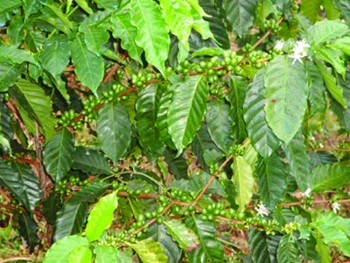 Traditional exports fell by US$37 million to US$168 million in the 2014, down from US$205 million in the 2013 period, a decrease of or 18 percent of this Agricultural commodities fell by US$2.5 million or 35.0 percent and were valued at US$4.6 million. The decline in earnings from “Coffee” exports which fell to US$3 million was the main contributor to this decrease.
Mining and Quarrying was valued at US$135 million, a decrease of 20.1 percent, moving from US$169 million in the 2013 review period.. “Manufacture” recorded a 2 percent decline and was valued at US$28 million compared to the US$28.5 million recorded for the similar January to march 2013 period. Non-traditional domestic exports during January to March 2014 were valued at US$177 million.