 Prices in Jamaica on average, fell sharply by 1 percent in December last, bringing inflation as measured by the country’s Consumer Price Index to 2.4 percent for the calendar year. The fall in inflation for December occurred across several main categories of goods and services.
The movement in the index for the fiscal year-to-date was 2.7 percent. The rate of increase on average is well below the target set by the government for the central bank to aim at, for the fiscal year of 4 to 6 percent. Had it not been for a spike in the rate of exchange between April and September last year, the rate for the year would have been even lower than the final numbers reported.
Food and Non Alcoholic Beverages and the Transport division declined by 1.5 percent. The fall in Food and Non-Alcoholic Beverages resulted from a decline of 6.2 percent in Vegetables, Starchy Foods due to increased supplies of agricultural produce the Statistical Institute of Jamaica (STATIN) stated. The decrease in the Transport was due to lower prices for petrol, while Housing, Water, Electricity, Gas and Other Fuels fell by 1.3 percent, due mainly to reduced rates for electricity, sewage and water rates.
Prices in Jamaica plunged for December
Heavy demand for Fontana shares
Fontana shares are now listed on the Junior Market of the Jamaica Stock Exchange with bids now in to purchase 7.7 million shares up $2.50 prior to the opening of trading. There is just one offer at $4 to sell 4,500 shares.
 The heavy demand in in keeping with heavy over subscription the IPO received. A number of investors in the stock are not pleased that the company varied the terms of the allocation of shares to persons in the general pool from the stated treatments included in the prospectus that stated that multiple applications would be merged and treated as one.
The share issue attracted 2,770 applicants for shares in the company. The order book on the buy side is shown in the accompanying chart with orders at 10 am.
The PE based on last year’s earnings is a low 8, suggesting that a price in the mid $4 region or higher is likely, once it can trade at those levels. Subsequent to the time the attached chart was created, the highest bid is now at $2.60 to buy 130,000 units with total bids in the syetem to purchase 17.7 million shares. One more offer at $3.77 to sell 30,610 units was posted after trading commenced. The maximum price the stock can trade at today is $2.44, 30 percent above the IPO price of $1.88.
Fontana lists today

Fontana Waterloo Road
Fontana shares will list on the Junior Market of the Jamaica Stock Exchange and will commence trading on Tuesday.
The shares that were well sort after will be in high demand with the price expected to jump sharply in a few days. A number of investors in the stock are not pleased that the company varied the terms of the allocation of shares to persons in the general pool from the stated treatments included in the prospectus that stated that multiple applications would be merged and treated as one.
Scotia Investments advised that they are currently in the process of disbursing refunds to applicants via transfers to each broker for their clients and expects to complete the majority of refunds during the week of January 7th.
The share issue attracted 2,770 applicants for shares in the company. Fontana brings to 38, companies listed on the Junior Market. In December, Eppley that was listed on the Junior Market moved over to the main market.
Stock trading disrupted across Caribbean
 Trading has not commenced on either the Trinidad or Jamaica Stock exchanges up to 1 PM, Jamaica time.
Based on a release from the Trinidad and Tobago Stock Exchange, (TTSE) a systemic problem affected the trading activity in allof the three exchanges in Jamaica, Trinidad and Barbados is the reason for the lack of trading earlier in the day.
The TTSE issued a release earlier today as follows, “TTSE wishes to advise all our valued stakeholders of a delay in trading on January 4th, 2019 due to a technical infrastructure issue experienced by one of our service providers which has impacted all three (3) major regional exchanges and is beyond the control of the TTSE. While our service providers are working expeditiously to resolve this issue, we have activated our business continuity process and advise that trading will commence later today. We thank you for your patience and cooperation at this time.”
The Jamaica Stock Exchange (JSE) advised no one of the problem, while a check on the Barbados Stock Exchange website revealed no information on trading for the day.

Marlene Street Forrest, Managing Director of the JSE.
IC Insider.com had previously indicated that the problem was with the current trading platform that was installed at the start of 2016, has been plagued with several problems. Marlene Street Forrest, Managing Directors of the JSE advised that the problem was not with the platform but was a connectivity issue that impacted the system that prevented trading from taking place.
Big gains for JSE Monday
The main market of the Jamaica Stock Exchange surged 11,391.32 points on the All Jamaica Composite index (AJI) with nearly 2 hours of trading on Monday with the index at 417,227.47 points but pulled back from the day’s high of 421,063.54 points earlier after rising 15,227.39 points.
The JSE Index climbed 10,378.78 points to 380,141.40 but the Junior Market Index rose 47.45 points to 3,229.84.
NCB Financial traded at $150, Barita Investments traded at a new high of $55, Grace Kennedy at $68.50 and Sagicor Real Estate Fund jumped to $13.93.
Jamaica’s growth crawls along at 1.8% PA
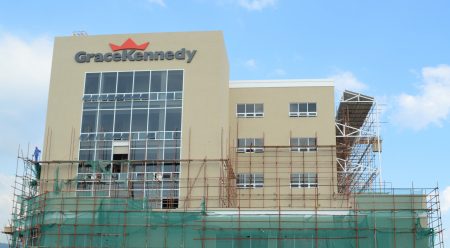
Construction secrtor contributed to increased growth in Q3.
The goods producing sector grew by a strong 5.1 percent but the services sector was up just 0.7 percent over the similar period in 2017, the report from the Statistical Institute of Jamaica (Statin) stated in their release on the performance on the local economy for the third quarter of the year.
According to Statin, all industries within the Services Industries recorded higher levels of output with the exception of Electricity & Water Supply which declined by 0.1 percent and the Producers of Government Services which remained unchanged for the period. Increases were recorded for: Wholesale & Retail Trade; Repairs; Installation of Machinery & Equipment (0.8 percent ), Hotels & Restaurants (2.1 percent ), Transport, Storage & Communication (1.4 percent ), Finance & Insurance Services (0.7 percent ), Real Estate, Renting & Business Activities (0.5 percent ) and Other Services (1.2 percent ).
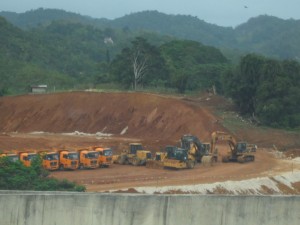
Mining was the biggest contributer to GDP gains in Q3.
JSE in big rise Friday morning
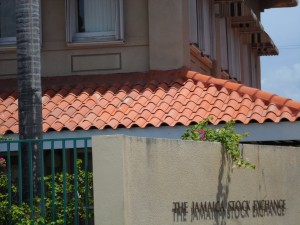 The main market of the Jamaica Stock Exchange surged 11,371 points on the All Jamaica Composite index (AJI) with nearly 2 hours of trading on Friday with the index at 408,686.63 points but pulled back to be at 406,567 points at 11:30 up 9,251.52 points.
The JSE Index climbed 10,360.40 points to 370,428.51 but the Junior Market Index slipped 5.01 points to 3,184.75. The rise so far still leaves the AJI short of the 11,126.51 points lost over the past two trading days.
NCB Financial traded at $146.83, Barita Investments traded at a new high of $50, Sagiccor Real Estate Fund jumped to $13.95 while Salada Foods traded at a new high of $35 but pulled back to $30 after. JMMB Group that traded 327 million shares traded 20.7 million shares today.
Proven buys NCB’s block of JMMB shares
 NCB Financial Group sold all the JMMB Group shares amounting 326.7 million units amounting to 20 percent of the total issues shares of the money market brokerage.
The shares were put through the Jamaica Stock Exchange only a few minutes after trading opened today, at $28.25 each and resulting in a consideration of $9.2 billion.. In September this year, PanJam Investment purchased 100 million or 6.1 percent of JMMB shares from NCB, leaving the block that was traded today. A spoke person for PanJam, indicated that they are not the buyers of today’s trade. Our sources indicate that Proven Investments are the buyers of the block today.
BOJ senses pick up in GDP growth

Image courtesy of arztsamui/FreeDigitalPhotos.net
Economic activity may has picked up pace in the latter half of the year compared with the first half, with a strengthening in real GDP growth and employment over the second half of the year, Bank of Jamaica is suggesting.
The central bank was commenting on the increase in money in circulation for December. “This projected acceleration in the growth in real currency demand for December 2018 is consistent with the higher growth rate that has been evident between August and November 2018,” the central bank stated. Economic growth in the June quarter was preliminarily placed at 2.2 per cent by the Statistical institute of Jamaica.
The bank went on to say, “when the forecasted change in the general level of consumer prices is taken into account, the projected real growth in currency for the 2018 is 10.5 percent, which is higher than the real growth of 7.3 percent for the previous year.”
The projected currency stock of $128 billion at end-December 2018 represents an annual growth of 15.5 percent, an acceleration when compared with the 12.9 percent recorded at December 2017.
Bank of Jamaica projects that the value of currency issued by the Bank will increase by approximately $18 billion (or 16.5 percent) in December 2018 to end the month. The central bank states that the projected growth for the month is broadly consistent with the 16.5 percent growth recorded for December 2017 as well as the five-year average growth rate of 17.3 percent for December.
BOJ net issued $4.2 billion in currency for December up to 14, this year (representing a 3.8 percent growth for the month to date). This compares to net currency issue of $1.4 billion over the same period in 2017.
Crude oil sinks below U$49
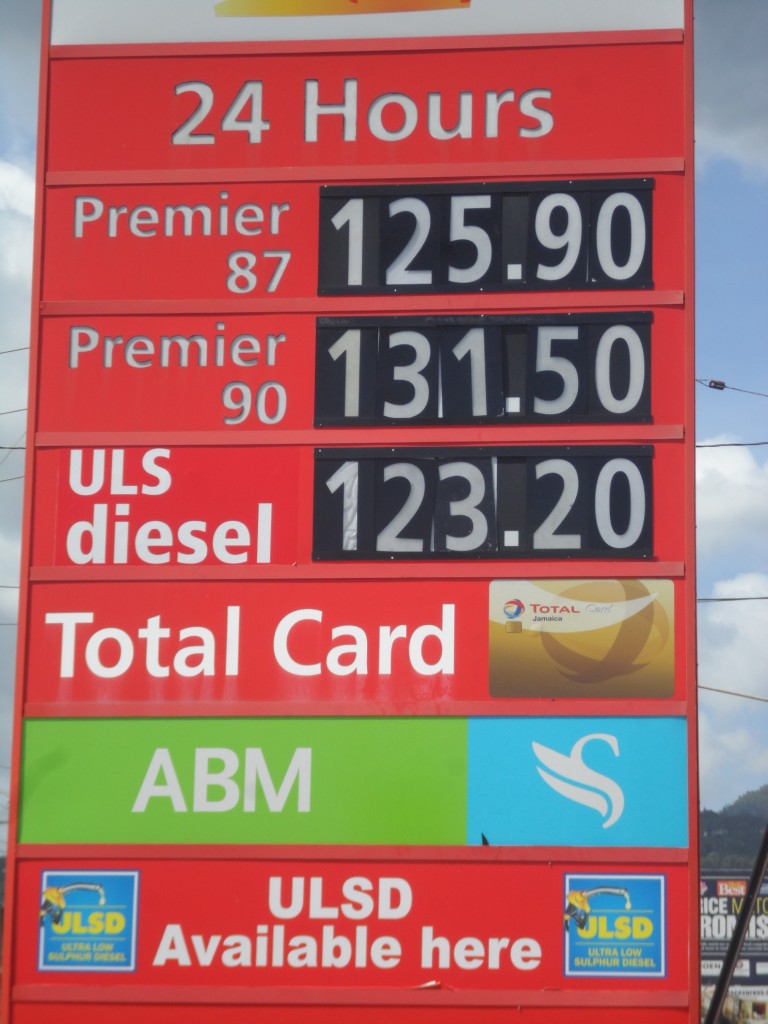 The price of crude oil on the world market sank to US$48.49 in early morning trading, the lowest levels since October 2017. The price peaked at US$76.10 in early October this year.
The trend suggests that the price will go even lower with increasing supplies said to be coming from production in the USA and concerns that the global economy is slowing and would use less oil.
The change in price has significance for the Caribbean region that are mostly net importers of oil, as well as Trinidad and Tobago who are producers of oil, and will earn far less income from the lower price. For Jamaica, it is likely to tame inflation as it did in November, when the country recorded zero inflation. It will also make the Bank of Jamaica’s inflation target of 4 to 6 percent targeting for the current fiscal year that the Country’s Central bank states was set by the Minister of Finance and the Public Service in September 2017, far more challenging than it was before.
If the price remains below the US$50 mark for a prolong period, then Jamaica could save somewhere in the region of US$$300 million per annum and that could positively affect the exchange rate, for the local currency.