Jamaica Producers Q3 profit doubles

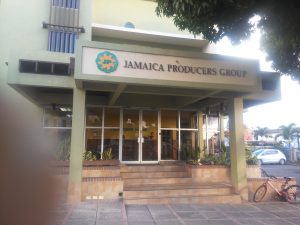
Jamaica Producers former headquarters in Kingston Jamaica

Profit surged 102 percent in the September quarter, to $330 million from $164 million in 2019 for shareholders of Jamaica Producers. For the nine months to September, profit jumped 66 percent to $959 million from $578 million in 2019 on the back of a modest rise in revenues.
Sale revenues rose just 5 percent for the quarter, to $5.22 billion from $4.96 billion but gained a stronger 8 percent for the year to date, to hit $15.4 billion from $14.3 billion in 2019. The third-quarter revenues grew more slowly than second-quarter revenues, which increased 12 percent to $5.4 billion over the 2018 period and net profit attributable to shareholders increased then by 52 percent to $399 million.
The group’s main activities are port terminal operations, logistics, food and juice manufacturing, the cultivation, marketing and distribution of fresh produce, land management and the holding of investments. The group has operations in the UK, Europe, Jamaica and some other Caribbean countries.
The current year is not the only one that profits jumped sharply for the group. In 2018, profit attributable to the Group’s shareholders rose 66.5 percent for the June quarter over that of 2017 and 65 percent for the half-year from revenues that grew 20 percent and 25 percent, respectively. The group had significant growth in profit from ongoing operations in 2017 over 2016 with negligible profit from operations.
Improvement in profit margin in the half of the year to 34 percent from 31 percent in 2018 continued at the same pace in the September quarter with 34 percent from 29 percent in 2018 and for the year to September, 34 percent from 30 percent in 2018. The improved margin helped push gross profit up 24 percent in the quarter to $1.76 billion from $1.42 million and rose 23 percent for the year to date, to $5.3 billion from $4.3 billion in 2019.

Selling, administration and other operating expenses rose 18 percent to $958 million in the quarter and increased 14 percent in the nine months to $2.8 million. Finance cost declined in the quarter, to $78 million from $89 million in 2018 and from $234 million to $277 million for the nine months.
Earnings per share (EPS) came out at 29.4 cents for the quarter and 85.5 cents for the nine months. EPS should end the fiscal year ending December to $1.25 with a PE ratio of 17 at the price of $21.50 it last traded on the main market of the Jamaica Stock Exchange and is in line with the average for main market stocks. The net asset value ended at $12.30, with the stock selling at 1.75 book value.
Gross cash flow brought in $3.7 billion, growth in receivables, investment transactions, purchase of fixed assets and the paying of $125 million in dividends resulted in cash funds at the ending at $927 million. At the end of September, shareholders’ equity stood at $14 billion, with borrowings at just $6 billion. Net current assets ended the period at $6.4 billion inclusive of trade and other receivables of $9 million, cash and bank balances of $927 million. Current liabilities stood at $3.2 billion at the end of September.
Jamaica Producers is a buy for the medium to long term.

Lasco Manufacturing 6-month profit up12%

With its best performance in the last five years with a 92 percent jump in profit to $1 billion in 2019 financial year, Lasco Manufacturing went on to increase profit a mere 5.5 percent in the September quarter from weak sales growth.
The improvement in profit emanated from increased efficiency than from increased sales.
Sale revenues fell slightly for the quarter to $2.06 billion from $2.066 billion in the 2018 period and rose 1.3 percent for the six months to $3.85 billion from $3.80 billion in 2018.
Profit grew to $280 million from $265 million in the quarter and 12 percent for the six months to September to $563 million from $503 million in 2018. Second-quarter profit declined compared to the June quarter when the company posted $283 million after-tax.
Improvements in operations led to gross profit margin in half the year rising to 37 percent from 35 percent in 2018 as the cost of sales fell 3 percent in the quarter and 2 percent for the year to date. Operating profit slipped slightly in the quarter, to $359 million from $364 million but jumped 7 percent for the year to date, to $714 million from $667 million in 2018, as Administrative expenses rose much faster than sales and gross profit.  Administrative expenses increased 14 percent to $392 million in the quarter and 11 percent in the half-year to $722 million. Finance cost declined in the quarter to $ 22 million from $32 million in 2018 and from $64 million to $54 million for the six months. Provision for profit tax fell from $66 million to $57 million in the quarter, with the half-year ending at $98 million versus $100 million in 2018.

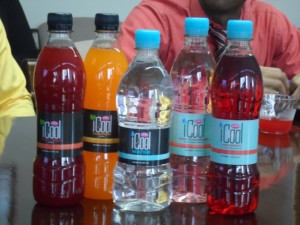
Lasco Manufacturing products

Gross cash flow brought in $791 million, but receivables and reduction in trade payables used up $697 million, $250 million went to pay dividends and $214 million as repayment of loans. Lasco invested $275 million in what is stated to be a long term investment in stocks these and other payments left cash generated at a negative $517 million, leaving liquid funds on hand at $401 million. At the end of September, shareholders’ equity stood at $6 billion, with the current portion of long-term loans at $484 million and long-term liability at $807 million. Current assets ended the period at $3.6 billion inclusive of trade and other receivables of $2 billion, cash and bank balances of $401 million and current liabilities ended the period at $1.4 billion.
With limited growth in sales from existing products, the company is expanding factory and warehousing facilities. “Capital investments being undertaken in a new warehouse facility and build-out of the expansion of the Dry Blend plant at White Marl,” Managing Director, James Rawle reported to shareholders in his commentary on the quarterly.
The company paid a dividend of 6.1 cents on June 28, amounting to $250 million, 61 percent greater than dividends paid out in 2018. The dividend yield was just 1.5 percent, with the stock price just over $4 on the record date in June.
Earnings per share came out at 7 cents for the quarter and 14 cents for the six months and should be in the 30-35 cents region for the full year. The stock last traded at $5.25 on the Junior Market of the Jamaica Stock Exchange on Friday with a PE of 14.

MPC Clean Energy hits $275

MPC Caribbean Clean Energy (MPCL) stock traded at a record $275 on the Jamaica Stock Exchange on Monday as investors position to take advantage of a rights issue of 22,848,320 class B shares to be offered by the company.
The listed shares were priced at J$130 or US$1 when it came to the market in late 2018. The proposed new shares will be by way of a renounceable issue at J$140 to Jamaican shareholders and US$1 per share for shareholders in Trinidad and Tobago with a record date of November 8 as the Company seeks to raise the equivalent of US$22,848,320 from its shareholders.
The company went to the market in November 2018 to sell up to 50 million shares but the take up fell well short with the capital with just 11.25 million units with Jamaican taking up over 77 percent of the issue and Caribbean Clean Energy Feeder Ltd taking up 18.4 percent.
MPCL has 34.4 percent interest in the Paradise Park project that comprises a 50 MWP solar PV plant in Westmoreland in Jamaica that comprises a total investment of approximately US$64 million.
The second seed asset Tilawind is a 21 MW onshore wind farm based in Costa Rica in which MPC effectively holds 50 percent with the other half owned by ANSA McAL Group a Trinidad and Tobago group the total investment in that operation is approximately US$50 million. The wind park has been in operation since March 2015.
According to the company, a further 14 projects have been prioritized and form the indicative deal pipeline for the Investment Company. These require a total investment estimated at US$499 million to deliver up to 314 MW of new renewable energy capacity. The listed company invests in MPC Caribbean Clean Energy LLC who in turn invest directly the operating projects.
The company posted earnings for the nine months to September that reverses the positives number in the June Quarter. The results released are confusing, lacks transparency and will not help the company in raising the desired capital.
According to management, they have investments in two power-generating operations, with both in operation for the September quarter and generated share in profits of associated companies of $56,788. With just one-quarter of operation before from one location, they enjoyed a share in the profit of associate of $145 million in that quarter. The management report states that production at the Costa Rican operation generated 9.4 percent more energy than in the prior year. The numbers just do not seem to add up and management did not provide an explanation as to the reason why in their quarterly report. While the company is reporting total share of profit of $205,858 and a loss of $45,749 for the nine months period, the results from operations look vastly worse. The company reported a loss of $109,523 for the September quarter but advertising cost of $87,020 was the major cause of the big loss.
Regardless of what has been achieved to date, the performance is well off from the projections in the prospectus with a projected income of US$1.39 million and profit of $1.25 million for 2019 and projected revenues of US$2.94 million in 2020 with a profit of US$2.76 million.

Strong first quarter for Wisynco

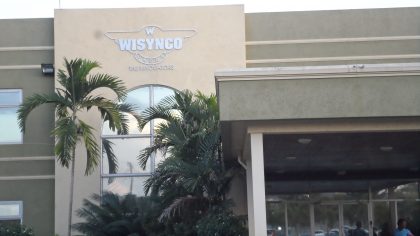
Wisynco traded at $22 on Thursday.

Wisynco Group enjoyed strongly increased revenues in the fiscal first quarter with a rise of 34.6 percent to $9 billion versus $6.8 billion in the June 2018 quarter and resulted in pretax profit jumping 52.7 percent to $1.4 billion and after-tax rising 53 percent to $1.18 billion.
According to brothers William and Andrew Mahfood, Chairman and Chief Executive Officer respectively, in their joint commentary accompanying the quarterly, “we had very strong growth in our core beverage brands as a result of increased demand and improved efficiencies in plant productivity. In addition, the strategic alliances between Worthy Park and St Mary’s Snacks along with increasing revenue from other portfolios contributed to drive revenues to new highs.”
The quarterly revenues are much higher than the $6.9 billion generated in the June quarter and profit of $694 million after-tax.

Wisynco brand Wata to benefit from 3 new production that is now in operation.

Gross Margin slipped to 36.8 from 38.2 percent in 2018 but Gross Profit still increased to $3.3 billion or 29.8 percent above the $2.6 billion achieved in the June 2018 quarter.
According to the directors, “the leveraging of our distribution system with the new portfolios, while driving revenue growth, favorably impacted our expense to sales ratio that declined to 22.5 percent of sales from the 25.6 percent for the first quarter of 2019. Selling, Distribution and Administrative expenses for the quarter increased by 18 percent to $2 billion above the $1.7 billion for the prior year and well below the increased revenues.

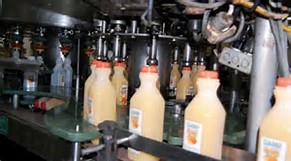
True Juice orange juice bottled by and distributed Wisynco

For the quarter ended September 30, 2019, Wisynco recorded Net Profits Attributable to shareholders of $1.2 billion or 31 cents per share compared to $769 million or 21 cents per share, an improvement of 47.6 percent over the corresponding period of the prior year.
The Group had equity capital of $12 billion with loan funding of $2.6 billion but with cash and investment funds at $5.5 billion after the Group operations delivered cash inflows of $1.64 billion. Net Current Assets stood at $6.2 billion with current assets of $11.5 billion.
IC Insider.com projects earnings of $1.40 for the current fiscal year with revenues reaching just under $37 billion and $1.95 for 2021. The stock closed at $22 and now sells at a PE ratio of 15 times the current year’s earnings and is fairly valued currently and seems to hold good long-term growth potential.

Carib Cement Q3 disappoints

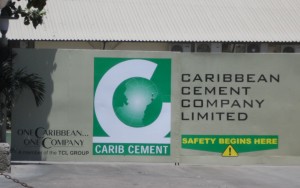
Caribbean Cement jumped $5.51 to close at $77.50 with 166,784 shares changing hands at the close of Monday’s trading after the company posted disappointing third-quarter results.
Revenues in the quarter to September fell from $4.46 billion to $4.38 billion representing a cut in volume sales, which the company stated was due mainly to the impact of heavy rains.
Compounding the drop in sales was increases in certain expenses that drove down profit in the quarter to just $77 million or 9 cents per share for the quarter compared to $255 million in 2018. Nine months results showed revenues slightly above 2018 at $13.5 billion versus $13.2 billion and profit of $1.57 billion versus $1.3 billion in 2018 for earnings of $1.85 per share $1.34 per share in 2018. The company suffered foreign exchange losses on the loan with its parent company that drove finance cost to $1.44 billion for the nine months from $1 billion in the 2018 period. Labour cost shot up 13 percent to $1.77 billion for the nine months and equipment hire jumped nearly 50 percent to $602 million.
IC insider.com projects 2019 full-year earnings at $3.50.

Junior Market rises – Thursday

The Jamaica Stock Exchange Junior Market Index rose 10.62 points to close at 3,362.79 on Thursday as 31 securities changed hands, with 13 rising, 8 declining while 10 remained unchanged.
Trading settled on Thursday with an exchange of 3,125,553 units valued at $7,771,742 compared to 2,463,223 units for $8,312,204 from 28 securities changing hands on Wednesday.
Trading ended with an average of 100,824 units for $250,701 for each security traded, in contrast to 87,972 units for an average of $296,864 on Wednesday. The average volume and value for the month to date amounts to 98,703 units valued at $466,158 and previously 98,564 valued at $480,309. In contrast, September closed with an average of 954,574 units valued at $2,612,695 for each security traded.
IC bid-offer Indicator| At the end of trading, the Investor’s Choice bid-offer indicator reading shows 5 stocks ended with bids higher than their last selling prices and 3 with lower offers.
At the close of the market, Access Financial gained $1 to end at $35 in trading 5,000 shares, AMG Packaging closed trading of 5,000 units and gained 30 cents to end at $2, Blue Power ended market activity exchanging 53,270 shares to close at $7.70 after falling 5 cents. Derrimon Trading climbed 3 cents and exchanged 4,000 shares at $2.48, Elite Diagnostic ended trading with 30,929 shares, after rising 20 cents to end at $5.80, Everything Fresh closed 10 cents higher at $1.25, with 65,418 stock units trading, Express Catering gained 10 cents at $6, trading 25,429 stock units. Fosrich ended trading with 4,060 shares, after rising 3 cents to end at $4.87, Fontana closed trading of 20,733 units and gained 10 cents to close at $7.35, General Accident closed trading of 154,808 units and gained 3 cents to end at $8.03 after trading at a record high of $9. GWest Corporation climbed 6 cents and exchanged 122,251 shares at $1.10, Honey Bun traded 2,665 units and gained 9 cents to end at $6.90, iCreate climbed 6 cents and exchanged 33,028 shares at 72 cents, Iron Rock Insurance shed 35 cents in trading of 8,500 units at $3.60. Lasco Distributors dipped 30 cents in exchanging 8,838 units at $3.50, Lasco Manufacturing dipped 5 cents trading 7,527 units at $4.90, Limners and Bards closed with a loss of 5 cents at $2.50, in swapping of 302,524 shares, Medical Disposables ended with a loss of 1 cent at $8.09 with 4,549 stock units changing hands. Paramount Trading closed with a loss of 18 cents at $2, after swapping 55,600 shares, Stationery and Office Supplies dropped 65 cents to settle at $11.85 with 2,800 shares crossing the exchange and tTech ended trading with 36,000 shares, after rising 49 cents to end at $6.79.

Prices of securities trading for the day are those at which the last trade took place.

Indies Pharma Q3 sales jump 45%

The financial news out of Indies Pharma for its third quarter to July were mixed at best as sale revenues jumped a strong 45 percent to $215 million from $148 million in the 2018 period but profit inched just 9 percent higher to $34 million from $31 million in 2018.
Sale revenues for the nine months to July increased 28 percent to $576 million from $449 million in 2018 but profit soared 41 percent to $113 million from $80 million after-tax liability of $24 million in the similar 2018 period but profit before tax, rose just 8 percent. While many investors are guided by the bottom-line growth, others see great virtue in the growth of the business hence the strong sales increase is viewed as a positive indicator for future hikes in profit.
The less than spectacular growth in profits started in the second quarter ending April when the company posted $33 million before tax after tax compared to $38 million in the same quarter of 2018.
Gross profit margin in the third quarter declined to 63 percent from 68 percent in the 2018 period, but for the year to date, gross profit margin improved to 67 percent from 64 percent in the nine-month period in 2018. Cost of sales rose 68 percent to $79 million from $47 million for the quarter and increased by 18 percent to $189 million from $161 million in 2018 for the year to date. The effect, operating profit fell just 3 percent in the quarter from $35 million from $34 million but increased 4 percent year to date to $113 million from $109 million in 2018.
Administrative expenses rose stunning 51 percent to $104 million in the quarter from $69 million in 2018 and increased 52 percent in the nine months period to $276 million compared to $181 million in 2018.

Vishnu Muppuri – Executive director of Indies.

The spike in administrative expenses resulted from “significant increases incurred for rent, lease and set-up costs for the new facility in Montego Bay Freeport”, Vishnu Muppuri the company’s Executive director, reported. Finance cost declined in the quarter to $85,000 from $3 million in 2018 and from $4 million in 2018 to $281,000 for the nine-month period.
Gross cash flow from operating activities brought in $126 million but changes in working capital including increases to directors and related companies reduced the net inflows to $98 million, after paying dividends of $107 million in February, cash funds ended up at $71 million, down from $101 million at the start of the financial year. Net current assets ended the period at $660 million inclusive of receivables of $197 million, related parties and directors’ receivables of $201 million. Current liabilities stood at just $62 million. The company has no debt as all loans were retired in the 2018 fiscal year. At the end of July, shareholders’ equity stood at $680 million.
The stock traded at $3.25 on the Junior Market of the Jamaica Stock Exchange. Earnings per share came out at 3 cents for the quarter and 9 cents for the nine months and should end around 12 cents for the full year for PE of 27 times earnings. While the stock appears over-priced, the strong growth in revenues for 2019, if it continues, should see 2020 earnings hitting 25 cents per share that would reduce the PE to 13 times in the new fiscal year that starts in November.

Acquisitions boost Derrimon’s profit

The acquisition of Woodcats International and the assumption of distributorship of the Trinidad based SM Jaleel and Company’s beverages helped to ratchet up performance for 2019 at Derrimon Trading.
Profit before tax grew 56 percent to $102 million for the June quarter and 52 percent for the half-year to $186 million. After-tax, quarterly profit was up 35 percent to $88 million and rose 32 percent for the six months to $162 million.
Sale revenues grew 49 percent in the June quarter to $3.1 billion and by 56 percent for the six month period to $6.3 billion. Cost of sales rose 51 percent in the quarter, resulting in reduced gross profit margin of 17 percent versus 18 percent in 2018 and for the half-year margins are the same as the second quarter in both years but with gross profit rising 50 percent to $1.1 billion.
Revenues from the distribution segment amounted to $3.5 billion compared to $1.7 billion in the prior year, while revenues from the retail segment climbed to $2.3 billion from $2.1 billion. Other operations accounted for $556 million for the half-year, up from $209 million in 2018.
The group’s operating profit rose 44 percent for the half-year, to $282 million from $196 million and 39 percent for the quarter to $139 million. Selling and distribution expenses soared 158 percent to $193 million for the six months and by 146 percent for the quarter to $100 million. Administrative cost rose 22 percent for the June quarter to $310 million and by 30 percent to $631 million for the half-year.  moved 30 percent from $73 million to $96 million for the half-year and by 7 percent to $37 for the latest quarter. “The major factors for the increase were due to utilities, distribution costs inclusive of trucking cost, marketing, advertising and staff costs in addition to the full refinancing of short-term debt facilities,” management advised shareholders in their comments on the interim results.

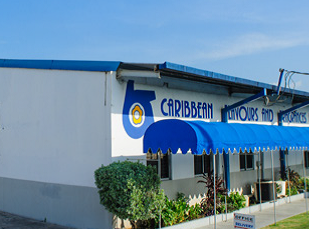
Caribbean Flavours Derrimon’s subsidiary

The group’s gross cash flow brought in $182 million but receivables jumped a sharp $427 million and inventories climbed $95 million to wipe out the cash inflows. New loan funding accounted for $208 million and helped in filling the gap, but the company still ended with negative overall cash flows of $279 million, leaving it with cash funds of $116 million at the end of the period. At the end of June, receivables ballooned to $1.6 billion with payables of $1.17 billion. Shareholders’ equity stood at $1.4 billion but borrowings dwarfed it by climbing to $1.8 billion. Current assets stood at $3.3 billion and current liabilities $2 billion.
The group’s earnings per share for the half-year was 5.9 cents compared to 4.5 cents in the prior year. IC Insider.com forecasts 15 cents per share for the full year for PE of 17 times earnings.
Derrimon Trading business includes distribution of household products, beverages, detergents and bulk foods, wholesale and trading outlets and supermarket, the manufacturing of flavours and fragrances and pallets.

Q1 profit falls 13% at JBG

Profit at Jamaica Broilers Group fell 13 percent in the July quarter to $361 million from $413 million in 2018 but IC Insider.com computations point to strong gains in profit for the year ending in April 2020 as revenues rise and costs are contained below inflation.
At the same time, profit attributable to shareholders dropped 8 percent to $368 million from $399 million in 2018 even as gross profit increased slightly over 2018 from $3.18 billion to $3.32 billion as sale revenues rose 9 percent to $13 billion, from $12 billion in the corresponding quarter in 2018.
Cost of sales increased 11 percent for the quarter, to $10 billion from $9 billion in 2018 resulting in gross profit margin in the quarter declining to 25 percent from 26 percent in 2018. Distribution cost rose just 2 percent to $445 million from $436 million in the corresponding quarter in 2018. Operating profit increased by 2 percent to $679 million from $665 million in 2018. Finance income fell sharply by 88 percent to $36 million from $300 million in the corresponding period in 2018.

Jamaica Broilers chicken

Administrative expenses remained flat at $2.3 billion, but Finance cost, declined by 7 percent to $299 million from $324 million in 2018 and corporate taxes fell a sharp 76 percent to $55 million.
The group’s segment results were mixed, with foreign exchange losses and political and economic volatility in Haiti negatively impacting the results. The Jamaica segment produced $8.4 billion in revenues, but just slightly above the $8.24 billion generated in 2018 profit resulting in a 9 percent fall in segment profit of $764 million. Operations in Haiti produced $19 million in profit compared to $60 million in the previous year from a fall in revenues from $595 million down to $530 million. Profit from the US operations climbed by 11 percent to $333 million from $ 300 million in 2018 as revenues climbed to $4.34 billion from $3.3 billion in 2018.
Gross cash flows from brought in $650 million but after a dividend payment in the quarter amounted to $212 million and other long term liabilities of $720 million, cash inflows ended at $316 million and that pushed cash and equivalent to $3.65 billion. At the end of July, shareholders’ equity stood at $15 billion with borrowings at just $7 billion. Current assets ended the period at $22 billion inclusive of receivables of $4 billion and inventories of $7 billion, cash and bank balances of $4 billion and current liabilities of $13 billion.
Earnings per share came out at 35.81 cents for the quarter. IC Insider.com is forecasting $3.50 per share for PE of 10 times the current year’s earnings and earnings of $5 for the 2021 fiscal year.

Sygnus Credit a stock to watch

Image courtesy of suphakit73/FreeDigitalPhotos.net

Sygnus Credit Investment a relatively new player in the financial market saw a 171 percent jump in interest income from US$1 million in 2018 to US$3 million for the financial year to June 2019.
Established in 2017, Sygnus is a credit investment company that provides credit financing to medium size business in the Caribbean
The impact on profit was not as dramatic as the gains in revenues, with profit rising 44 percent to US$2 million from US$1.4 million in 2018. The major reason for profit lagging revenue is three major items.  Fair value gains on investment fell from $644,000 in 2018 to just $135,000 in 2019 while the Management fee rose 288  percent from US$182,368 in 2018 to US$707,175 and net foreign exchange loss moved from US$50,000 in 2018 to US$219,000. Management fees were lower in the preceding financial year as the investment management waived them manager in the first half of that year.
The near-full deployment of US$20 million of funds on hand at the start of the year, into higher-yielding investments in the form of loans, was the major contributing factor to the growth in interest income.
Other operating and administrative expenses rose 214 percent to US$1.3 million in the year from US$415,000. Accounting expenses increased by 79 percent to US$37,323. The results for the final quarter were affected negatively by major turn about-turn in foreign exchange movements with a gain of $856,000 in the third quarter moving to a loss of $219,000 in the fourth quarter. Additionally, while interest income for the third quarter was $979,000 it slipped to just $728,000 in the final quarter, most likely due to change in the value of the Jamaican dollar. The effect of those changes is that a $1 million profit for the third quarter was not reproduced in the final quarter, even with more funds deployed in higher income-generating assets than the securities they were in before. The profit for the final quarter came out at just $124,000, well off from the fourth-quarter profit.  Going forward, the company will be using borrowed funds to supplement its resources that will help in boosting revenues, profit and allowed for growth in its business.
Sygnus paid US$954,000 in dividends leaving shareholders’ equity at US$37.6 million, $34 million was lent to customers and $3 million was held in liquid assets that were available for lending. Earnings per share came out at 0.59 US cents for the financial year-end compared to 0.85 US cents for the 2018 financial year.
IC Insider.com forecasts earnings of 15 US cents or J$2 per share. The stock traded at $23.70 on the main market of the Jamaica Stock Exchange with a PE ratio of 12 times 2020 earnings making it a good buy.