 Trinidad’s National Flour Mills reported a 200 percent jump in profit for the six months to June to $20.57 million versus only $6.79 million in 2014 and earnings per share of 17 cents and 10 cents for the quarter.
Profit fell in the June quarter from that of last year to $11.7 million versus $14.3 million but from higher revenues as profit margin shrank to 23 percent from 26 percent. Revenues climbed 15 percent for the six months to $245 million and a 10 percent gain to $124 million for the June quarter.
Helping the company is the sharp fall in the price of wheat on the world market from a high of more than US$700 to just over US$500 now but below US$500 per tonnes for quite a bit of the reporting period this year. National Flour earnings for the full year to December should end around 40 cents per share.  The stock trades at $2.10 around 5 times earnings, a low valuation and if the company can maintain the level of profit now being generated and hopefully improve on that in 2016, the stock stands to generated a good level of appreciation. Investing in the stock is not without risk. The largest item of cost, wheat and the ability for management to adjust prices if wheat prices increase can be critical.
Borrowings have declined from $122 million at the end of the financial year in December last year to $57 million at the end of June while cash fuds are at $57 million while equity stands at $215 million.
The company shares are listed on the Trinidad Stock Exchange.
Huge jump in National Flour’s profit
Product expansion at AMG
AMG Packaging (AMG) a junior market listed company advised the Jamaica Stock Exchange of their decision to expand into the manufacturing of toilet paper and hand towel. AMG will be manufacturing these additional products, at a facility leased on Orange Street, downtown Kingston and anticipates starting production by the end of October 2015.
 The company says it “ is confident that this new venture will aid in decreasing the importation of products, provide meaningful employment opportunities subsequently assisting the growth of the Jamaican economy.”
AMG Packaging ventures into the new ventures at a time when it appears that real growth in it’s existing business has slowed considerable in the past year, the new business is likely to boost sales volume and ride on some of the existing overhead costs of the current Packaging operations.
AMG Packaging, currently, involved in the manufacturing of boxes, for packaging, reported a 42 percent jump in the nine months’ profits to May 2015 of $52 million, compared to $37 million in 2014. Profits grew 58 percent for the latest quarter to $21 million over that of 2014. Sales revenue rose just 4.5 percent for the nine months to May, this year, to reach $462 million and is up by 6 percent for the last quarter, hitting $161 million. The increased revenues in the May quarter and nine months to May this year, is well down on the strong 36 percent rise in the May 2014 quarter of $152 million and 40 percent in the nine months to May, to reach $442 million.
Toilet tissue and hand towels are products that are sensitive in nature including pricing, is likely to have a wider market than the existing products of the company.
Expansion hurts Lasco Distributors
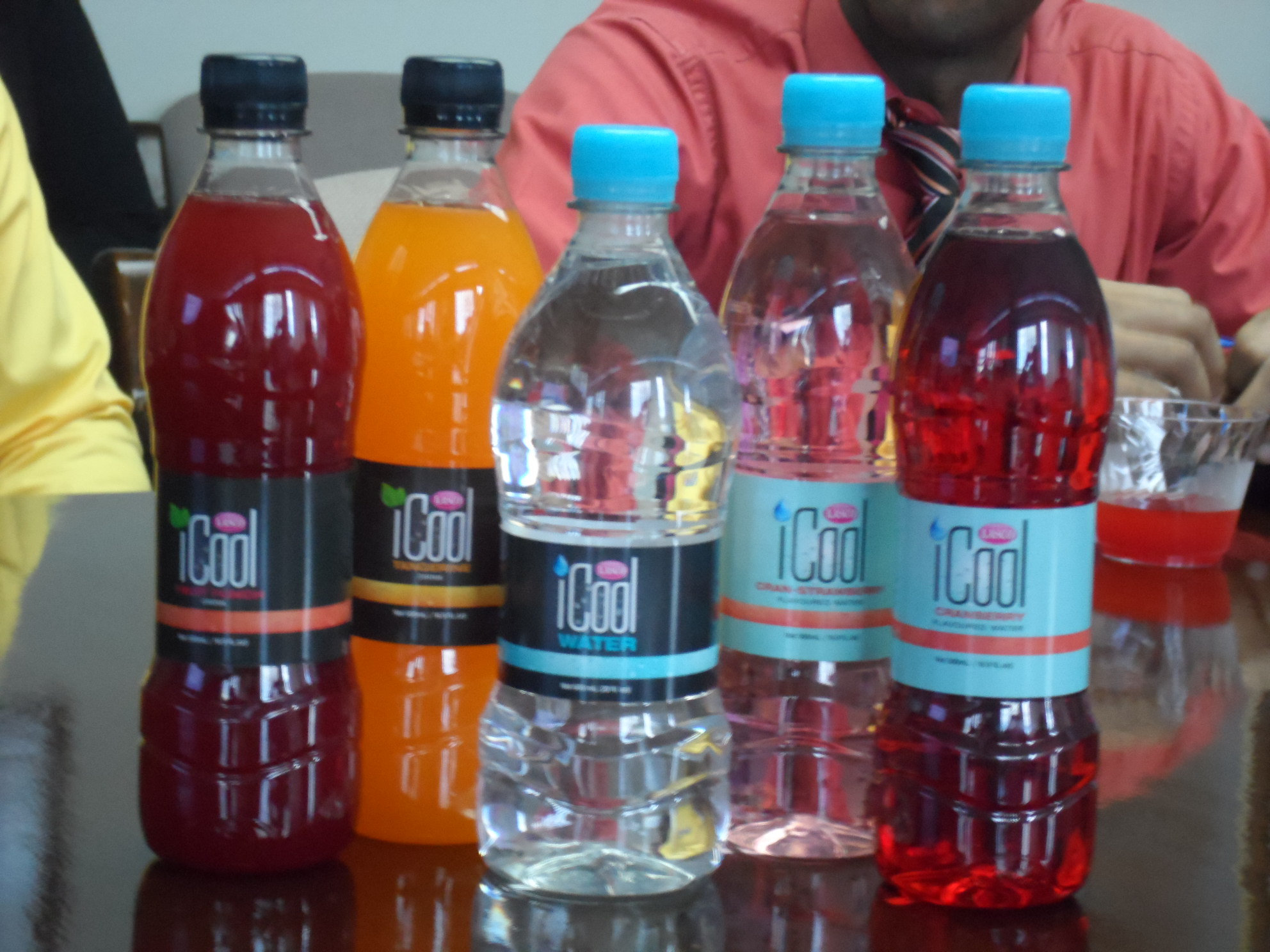
Lasco’s new I Cool drink distributed locally by Lasco Distributors
Profit slipped 11 percent in the March quarter for the company to $152 million from $171 million in 2014, from revenues that jumped a significant 26 percent to $3.16 billion from $2.5 billion. For the full year revenues grew a lesser level of 18 percent to $11.2 billion and profit fell to $547 million from $587 million after providing for the cost of share options to employees of $26 million, but this was not the only item driving down profit.
Operating cost rose with the average number of persons employed during the year climbing to three hundred and sixty nine (369) from three hundred and forty four (344) helping to push the wage bill 21 percent to $934 million. Administrative, selling and other expenses rose 18 percent to $1.53 billion during the year. Gross profit margin declined to 17.94 percent from 19.37 percent in 2014 and was the major factor for the fall in profits.
With increases in sales, inventories grew much more than growth in revenues in the final quarter at 44 percent, receivables increased 26 in line with increased sale revenues while payables grew by 38.7 percent.
The company reported that the “claim by Pfizer Limited (Pfizer) against Lasco Distributors, and others for damages for breach of a patent relating to a particular product. Final judgement as to liability was received from the Privy Council in favour of the company. The matter is now set for 18 January 2016 for assessment of damages payable to the company under the undertaking Pfizer gave to the Court.
Earnings per share ended at 16 cents, while the stock is trading at $1.69 or just over 10 times historical earnings, the focus has to be on the future especially with the strong increase reflected in the final quarter sales numbers. Investors need to bear in mind that profits become taxable at 12.5 percent starting in the second half of this fiscal year and for five more years.
Profit up 171% for National Enterprises

National Flour – one of the companies that NEL has interest in
“Your Board’s strategic decisions to pursue a diversification strategy by seeking new investments and strengthening management has also started to produce results” Kenny Lue Chee Lip, Chairman of the company stated in a release to the Trinidad & Tobago Stock Exchange recently.
Trinidad Telecom produced higher results of $85 million, up from a loss of $226 million and Trinidad Nitrogen Company $157 million versus $192 million in 2014 and $29 million. National Flour Mills in which NEL owns 51 percent also reported improved earnings, this company is listed on the Trinidad Stock Exchange.
NEL expects dividend income of $318 million compared to $305 million in 2014. NEL received the first full year earnings from its investment in a 10 percent shareholding in Powergen yielding $11.5 million in dividends, as well as dividends from the investments in First Citizens Bank and Clico Investment Fund. An investment in November, 2014 in Pan West Engineers LLC (the owner of 10 percent of Phoenix Park Gas Processors Limited) as a member of a consortium produced dividends of $9.8 million.
A final dividend of 27 cents is proposed which when added to the interim dividend of 23 cents gives a total dividend of 50 cents for the year (2014: 46 cents).
The value of each of the 600 million issued shares is $5.67 each and the stock last traded on the Trinidad and Tobago Stock Exchange at TT$17.21.
Another bank for JMMB stable
 JMMB Group has acquired ninety percent (90%) of the shares of Banco Ahorro y Credito Rio (Banco Rio) through the group’s Dominican Republic subsidiary, JMMB Holding Company Limited after obtaining regulatory approval for the acquisition, the group informed the Jamaica and Trinidad & Tobago Stock Exchanges today.
Banco Rio is a savings and loans bank, in accordance with the Financial and Monetary Law of the Dominican Republic they are licenced to provide consumer loans; loans to small and medium enterprises (SMEs); commercial loans; credit lines; credit cards, cambio services; savings accounts and certificates of deposit.
“This acquisition serves as another key step in JMMB’s strategy of building out an integrated financial services business model in the Dominican Republic (DR) market. In particular, for all current and prospective JMMB and Banco Rio clients in the DR, this acquisition will pave the way for them to access an even more diversified bundle of financial solutions (through banking and investments), that will serve to achieve their financial goals and objectives at every stage of their life,” states JMMB in its report.
 JMMB is a diversified financial group with operations in Jamaica, Trinidad and Tobago and the Dominican Republic.
JMMB made revenues of $4.5 billion in the March 2015 quarter 13 percent ahead of the $3.96 billion generated in the 2014v period but was only able to report a disappointing $119 million in the quarter compared to $488 million in 2014. For the 2015 fiscal year revenues amounted to $18.46 billion or 17 percent ahead of that of 2014 of $15.75 billion. Increased cost which climbed much faster than revenues held profits down for the year but more so in the final quarter. JMMB shares trade on the Jamaica Stock Exchange, and was last quoted at $7.50, or just 6.4 times 2015 earnings.
Profit drops at Blue Power
 Sales for the Blue Power to April this year increased from $1.046 billion to $1.06 billion, with both divisions showing improvement. Lumber Depot division moved from sales of $728 million to $735 million while the Blue Power division improved from $318 million to $325 million.
While revenues were flat administrative cost climbed 16 percent or $22 million to $157 million, helping to push profits down for the full year.
Profits for the financial year stood at $71 million before tax with the Lumber Depot division contributing $26 million and the Blue Power division adding $45 million in 2014 profit was $93 million. The company produced only $7 million in profit in the final fiscal quarter compared to $12.4 million in the January quarter from slightly less sales in the fourth quarter. After providing for corporate taxes $654,000 were profit for the year ended at $70 million as the company became liable to tax after completing five years on the Junior Market in the third week of April compared to net profit for the previous year of $93 million. Earnings per share ended at $1.24.
The company that will meet shortly to consider a dividend has cash of $166 million on and as of April with cash generated from operations being $55 million compared to just $13 million in the prior year.
The stock which is priced at $9.50 on the junior market of the Jamaica Stock Exchange may be fully priced currently.
LascoMan profit jumps 78% in Q4
Lasco’s new I Cool drink where demand is resulting in an increase in the plant size.
For the financial year, revenues climbed 19.4 percent to $4.8 billion from $4.03 billion and profit of $669 million is up from $584 million. Gross profit climbed 34.7 percent well above the growth in revenues, a very positive development. Gross profit for the quarter jumped a huge 86 percent helping to deliver the stunning increase in profit for the quarter and augurs well for results for the coming fiscal year, and is a result of new products now being produced by the new plant.
Administrative expenses climbed 44 percent to $555 while finance cost moved from $73 million to $125 million. The average number of persons employed by the company during the year was fifty-one up from forty-two in 2014 helping to push labour cost from $147 million to $209 million. With the new factory facilities operational, depreciation ended at $67 million up from $27 million in 2014 but is set to jump in 2016 with only a Borrowingfraction of the annual charge booked in 2015, additionally, there are more assets to be transferred to fixed assets that will give rise to even higher depreciation charges.
Borrowing climbed to $1.64 Million from $1.49 billion at the end of March 2014, the increase helped to fund capital expenditure of $523 million during the year. A total of $329 million was paid back on loans during the year.
The last quarter numbers suggest that profit could end around $1.2 billion for the year or around 30 cents per share. While the company becomes taxable this year capital allowances coupled with tax payable at 12.5 percent, will result in little or no taxes being paid on profit for the year.
The net book value of property, plant and equipment includes assets under construction amounting to $1.34 billion. The cost will be depreciated once the property is complete and available for use. The estimated additional cost of completion of the facility is $373 million.
The company is listed on the junior market of the Jamaica Stock Exchange and last traded at $1.31 for an historical PE of just over 8 and around 4 based on IC Insider’s projected earnings. The stock should deliver a healthy increase in price during the fiscal year.
Little profit in Q4 for Lasco Financial
 Lasco Financial Services reported profit of $191 million or EPS of 15.5 cents for the March 2015 year, an improvement of 8 percent over the $177 million made in 2014. The last quarter was poor with only $10 million in profit, down sharply from $41 million made in 2014, due to a combination of developments.
Revenue for the last quarter hardly grew, ending at $148 million versus $145 million in the 2014 quarter while expenses grew by $28 million due mainly to increased spend on marketing and selling expenses. Jacinth Hall-Tracey, Managing director indicated that the period suffered from squeezed margins on foreign exchange trading and foreign exchange losses in the quarter, resulting from the revaluation of the Jamaican dollar and greater stability of the exchange rate. Loan disbursements slowed as credit rating data used in assessing potential clients resulted in lower loan approvals.
The PE ratio of the stock is 13 based on the last reported earnings, normally the ratio would not be that high. Mayberry’s acquisition of 20 percent of the company’s shares has changed the dynamics and remove some supply from the market.
The company has cash of $500 million and is generating over $200 million per year. If the company can find the formula to ramp up good quality lending successfully, the profit outlook can be transformed considerably with high profit margins for lending. “We are working on a number of initiatives that will help in the transition from lower income in foreign exchange activity” Hall-Tracey said. The area of credit approval is one that they is being revisited as the use of credit rating information is stymying lending. But Hall-Tracey expects profit for this year that ends March 2016 to be higher than for the year just ended, subject to taxes on profit which the company will start bearing at fifty percent of the official tax rate of 25 percent.
The equity capital of Lasco is $812 million and is well below that of its two siblings who have equity in equity of more than $2.4 billion each. The company has done well from the money remittance and cambio operations but it is in the lending that the future growth prospects seems to rest. Hence the connection between Mayberry with the know-how having been exposed at Access Financial. The company has the free capital to increase lending with only $147 million in loans at March.
Undervalued Caribbean Flavours
 The company seems poised to hit earnings of 65 cents per share for the June 2015 financial year, making it attractive for some short-term gains with the current price of $2.09 at a PE ratio of 3 times earnings, having earned 19 cents per share for the quarter and 43 cents for the nine months, to March 2015.
Caribbean Flavours & Fragrances enjoyed a moderate increase of 16 percent in profit for the March 2015 quarter over the similar period in 2014. The increase was helped by an improvement in gross profit margin that moved from 39.6 percent to 44 percent. Profit came in at $17.3 million for the quarter versus $15 million in the similar period in 2014. For the nine months to March, profit declined slightly from $39.7 million in 2014 to $38.9 million.
Sales were up moderately in the quarter from $62.8 million in 2014 to $67 million. For the nine months to March sales grew 11.7 percent to $210.6 million from $188.6 million but cost of sales rose faster than the growth in revenues from $111.7 million to $133.5 million in the nine months or 18.75 percent. Administrative cost increased 21 percent in the quarter, and just 2 percent for the nine months, vastly better than the high double-digit increase in the prior year. The return on average equity an attractive 33.5 percent per annum. The negative is that for its small size there is limited growth from existing operations.
The balance sheet is in a healthy state with equity of $195 million or $2.17 per share. There are no borrowed funds while current assets is $210 million versus payables of only $16 million.
The principal activity of the company is the manufacture of and distribution of flavours mainly for the beverage, baking and confectionery industries. The company also sells food colouring and fragrances.The stock is listed on the Jamaica Stock Exchange junior market and is recommended as a buy by IC Insider.
Profit may not be far off at C&W
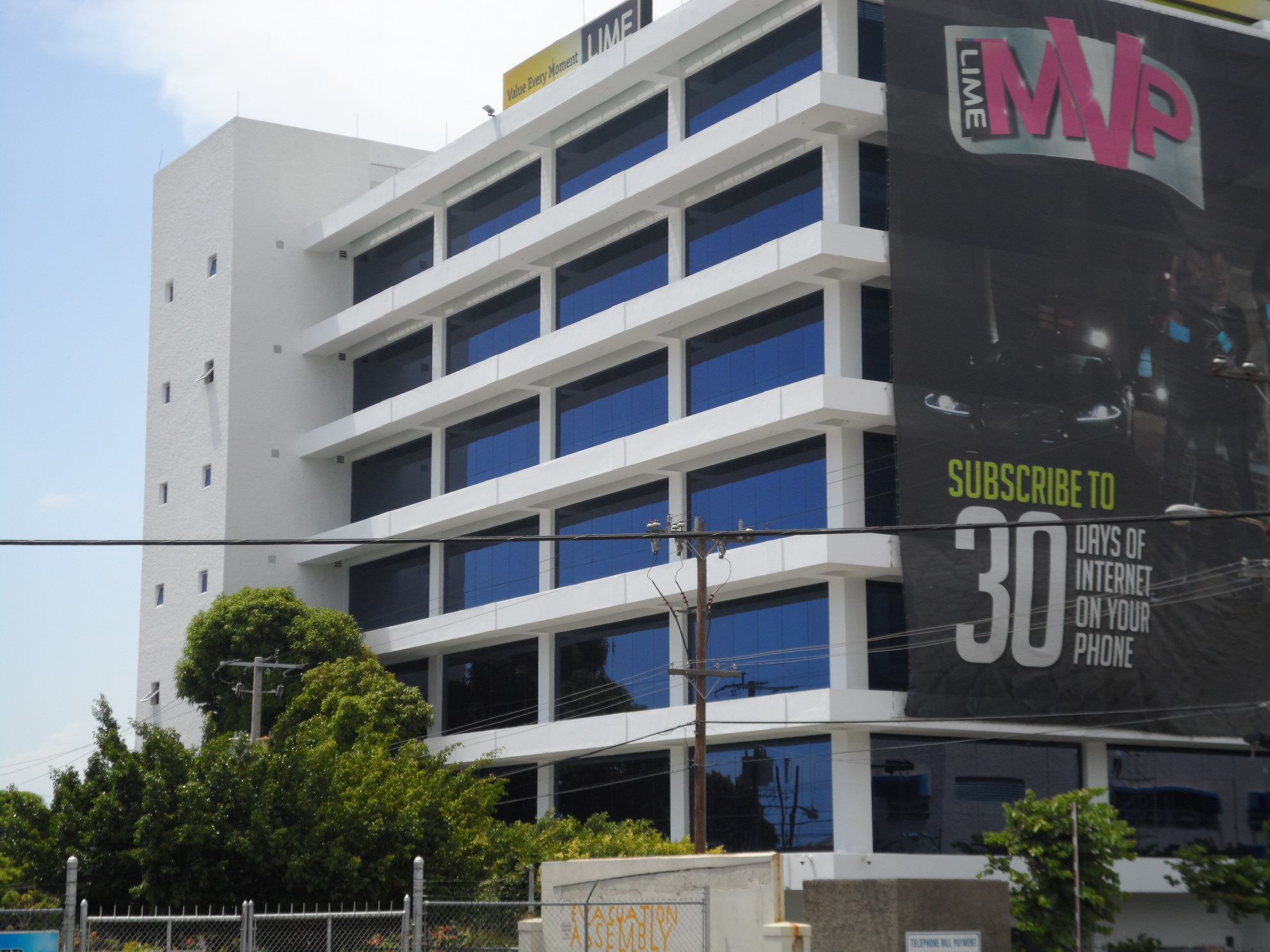
Cable & Wireless HQ
During the financial year Cable & Wireless added more than 107,000 mobile subscribers bringing the total to 820,500, according to the annual report of CW Communications (CWC) the parent company of Cable & Wireless. The cellular customer base has just about doubled since March 2012. At the end of December last year, C&W stated then that the cell customer base grew 18 percent, year to date to 813,000. C&W is said to have grown the cell customers by approximately 80,000 for the year to March 2013 and for the 12 months to March 2014 by 165,000.
Growth in cell customers increased mobile market share to 28 percent, based on customer who used their handset within the last three months according to the parent company, and probably more, based on all their customers with credit balances on handsets. The subscriber base of its main rival Digicel Jamaica, is said to hover around two million, but in all possibility, the number is under 2 million with the growth in C&W numbers over the last four years.
The increased subscriber base rocketed the mobile segment to incontrovertibly become the leading segment for the company. Mobile revenues earned $8.7 billion up 30 percent year on year; fixed voice remained flat at $6.5 billion, managed services at $3.6 billion was 25 percent higher than in 2014 and broadband & video at $2.7 billion compares to $2.3 billion or 17 percent increase year on year.
Some $4.5 billion of the exceptional charge relates directly to the flow acquisition. How much income will flow into C&W Jamaica from that operation is unknown at this time, but it should mean at least reduced cost for C&W from its existing operation. Revenues should continue to grow with the mobile customers added last year, generating income for the full year rather than part thereof, as occurred in the years of acquisition. The company should continue to add more customers in the current year as it goes after increased market share, particularly in the cellular market. The numbers suggest that the company could well return to profitability this year, based on the above savings and potential growth in revenues.