Shareholders of Alliance Financial Services will offer later this month just over 1.25 billion shares to the public for purchase at $1.59 each, for a total consideration of $1.99 billion.
 The Invitation opens at 9 am on December 28 and will close at 4 pm January 11, subject to the Selling Shareholders’ right to close the issue at any time after it on the Opening Date once the shares are fully subscribed.
During its sixteen (16) years of operation, the company has grown to become a notable Cambio and remittance service provider in Jamaica.
The company reported a $709 million profit for the year to September 2020, from revenues of $1.5 billion. The 2020 profit equates to earnings per share of 11.3 cents for a PE of 14 but using the 2019 earnings the PE would have been 12.7, with both below the Jamaica Stock Exchange Main Market average of 17.
JMMB Securities are brokers for the offer.
Key rights issue offers big upside
Existing Stockholders of Key Insurance will be given the right to apply for new shares in the company and have been provisionally allotted 259 new ordinary shares for every 500 existing ordinary shares at $3.50 each.
 The offer is renounceable and will therefore allow existing Key shareholders to assign their rights to these shares, wholly or in part, to others. Shares not taken up will be available to shareholders who indicate they wish to acquire more new ordinary shares than their allotment.
The issue will open on December 23 and will close on January 11, 2021, with the last date to renounce the rights, being January 4, 2021.
The issue will raise approximately $670 million to boost the company’s equity base. In the offering circular dated December 11, Chairman of Key Insurance, GK Group CEO Don Wehby explained, “The capital the rights issue will raise will be critical to the implementation of Key’s vision and strategic plan, which focuses on achieving profitability targets and sustainable long-term growth, which in turn will provide an attractive return on investment to our shareholders. The Board is extremely optimistic about Key’s future, and we are confident that the management team is well positioned to maximise the Company’s full potential and shareholder value.”
 In March this year, GraceKennedy Financial Group acquired 65 percent of the share capital of Key.
The Issue is one component of the overall strategy implemented by Key’s Board and management team in 2020 geared towards strengthening the Company’s capital base so as to ensure regulatory compliance and future growth. Key has also entered into an agreement for the divestment of its investment property located at 18-22 Knutsford Boulevard. The sale of the property will be completed in the first quarter of 2021.
The company reported a small profit for the September quarter of $5 million from net premium income of $204 million but reported a loss of $538 million before tax credit of $180 million for the year to September. The year to date loss. includes a one-off charge of $323 million against profit.
The offer is underwritten by GK Capital Management. The stock’s last trade on Wednesday was $8.40, giving shareholders a big incentive to purchase.
This issue is the third to come to the market at the same time. Sygnus Credit Investments Additional Public Offer (APO) to open on December 18 and closes on December 23 to raise upwards of US$10 million while Derrimon Trading APO opens and closes in January to raise $3.50 billion.
Virtues & pitfalls of OPAs & stock splits
A reader of IC Insider.com asks the following question. In general, based on what l have read, listed companies can raise capital faster than getting a loan. I think there is a risk for the company that the Additional Public Offer (APO) can be undersubscribed. What are other ways APOs may hurt the company?
 An APO is just like an IPO but it is usually better as the former is already listed and has followers and a wide number of shareholders who are familiar with the company’s history of management and financial wellbeing.
Shares issued to the public can be undersubscribed if the pricing is out of line with investors’ expectations or if market conditions change adversely after the issue opens. Bear in mind that the management and their Broker would get a sense from the market whether the issue will be taken up or not. Brokers will usually do roadshows to pitch an issue or get feedback from their clients before pricing and going to market with the issue. At least with an APO, the market has already determined the value investors place on the company so pricing is easier than for an IPO that has to be priced off the indicative market valuation.
One more question? if there’s a stock split after an APO ( thinking of PanJam), might it be better to buy shares after the APO as they could buy more shares for less money, is my understanding correct?
Stock splits tend to cause the stock price to rise because the news of the split and the lower share price stimulate short-term interest and if investors wait until after the split they are likely to pay more for the stock in real terms. In the case of PanJam buying in the APO could be the best bet. It, however, depends on the timing of the split as well as that of the APO. The odds are that the split would take place before the APO and if history is anything to go by the stock price will rise and result in a higher APO price than the price before the split. Buying the stock now before the announced stock split may be the better move.
Tropical Battery IPO oversubscribed
oThe Tropical Battery issue of 325 million ordinary shares at $1 each opened on Tuesday, September 22, was oversubscribed. The company exercised the option to close the offer early at the end of the opening day.
 The offer comprised shares sold by existing shareholders and by the company. The net proceeds that the company will get will be for expansion and upgrading of the operating facilities and working capital needs.
Earnings per share are around 7.7 cents, putting the stock is price value at a PE ratio of 13 times 2020 earnings, leaving little or no room for short term gains, with it, priced 19 percent above the market average.
NCB Capital Markets, brokers for the issue advised that applicants of reserved shares will be allocated in full while applications in the General Public Pool will receive the first 50,000 units plus approximately 30.6499 percent of the excess shares they applied.
All monies to be refunds will commence next week Wednesday, September 30, will be processed as per their instructions on the GoIPO platform. Refunds to all other applicants will be made to the respective broker.
The company is t listing on the Junior Market of the Jamaica Stock Exchange with the profit for the next five years not subject to corporate taxes and the following five year period resulting in taxes paid at 50 percent of the regular rate.
The listing will take the number of Junior Market companies to 41 and the 44th company to be listed on that market since 2010.
IPOs are back the Tropical issue
Just when investors thought COVID 19 had killed off IPOs for this year, suddenly pops up, Tropical Battery‘s long-promised initial public offer. The prospectus for the issue is now available to the public.
The issue for 325 million ordinary shares at $1 each of with up to 187.5 million units reserved for priority applications, opens September 22 and is scheduled for closing on September 30, subject to the right of the Company to close it earlier.
The Company intends to apply for the shares to be listed on the Junior Market of the Jamaica Stock Exchange, subject for at least $260 million being raised, by way of this invitation.
The total issued shares following the offer will be 1.3 billion units, with the parent company owning 75 percent. That will allow enough shares to be in the public hands to facilitate adequate liquidity in the stocks for some time.
The Company generated profit before tax of $87 million from revenues of $1.74 billion in 2019, a decent increase of 18.6 percent higher than in 2019 and a pretax profit of $45 million from revenues of $1.47 billion in the prior year, to September or 8.6 percent above the 2018 sales.
Gross operating revenue for the nine months to June this year increased nine percent to $1.36 billion from $1.25 billion in 2019, with profit before taxation falling from $67.6 million to $62 million.
Future growth, the Company says, “will come primarily from the addition of new product lines, i.e., Renewable Energy Batteries, Oils and Lubricants, Tyres, etc., organic growth of existing products, expansion and the renovation of our retail stores.”
The proceeds of IPO will be split equally between the selling shareholder and the Company, resulting in $162.5 million going to each, net of cost.
 The Company plans to use the amount collected for expansion and working capital purposes, including but not limited to new product lines, expansion and renovation of retail stores, including an expansion of the parking area at the retail store at Grove Road in St Andrew. Completion of the buildout of and relocating to the new warehouse, head office and retail store at Ferry, Acquiring and install information technology systems for greater efficiency and improve customer experience and expansion of Mobile delivery fleet of vehicles.
Total shareholders’ equity at the end of June stands at $593 million, while our long term liabilities fell by to $315 million with the total interest-bearing debt of $415 million. The Company is owed $190 million by a related party and is interest-free, but payable on demand.
With earnings per share around 7.7 cents, the stock is priced around a PE ratio of 13 times 2020 earnings, leaving little or no room for short term gains.
NCB Capital Markets are the brokers for the offer. Unfortunately, for investors, there are no forecasted earnings included in the prospectus to help to guide them. This practice leaves a lot to be desired and it is fulltime, the authorities step up to the plate and ensure that all prospectuses include forecasted data for a least three years. That is not asking too much in the drive to build a developed capital market.
Trans Jamaican Highway trades at $1.02
Shares of Trans Jamaican Highway trades at $1.02 after listing this morning. The stock that was sold to the public at $1.41 in February traded 17,804,223 up to $1.39 at 11.18 AM and has fallen 28 percent from the Initial Public Offer in the Jamaican dollar market but far less based on US dollar trading.
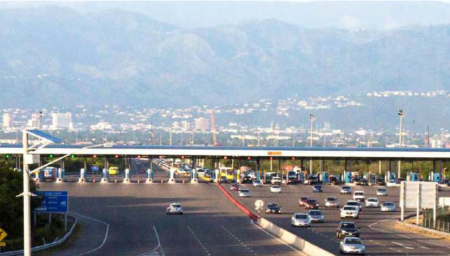 Bids in the market to buy are sparse with twenty bids to buy between $1.02 and a low of 50 cents, while sellers are dominant with 600 on the offer to sell from $1.03 upwards.
The public offer attracted 36,062 applicants and was oversubscribed and with a total intake of $25.12 billion.
The public offer attracted 36,062 applicants and was oversubscribed and with an intake of $25.12 billion.
The Concession Company and the Public Sector Employees reserve shares pool were undersubscribed. The excess was transferred to the Registered Pension Funds and E-Tag Reserve Pools. Applicants in the Registered Pension Funds Reserve and E-Tag Reserve Pool were fully allotted based on transfers to the Registered Pension Funds and E-Tag Reserve Pools. Underwriters Reserve Pool was allocated shares on a pro-rata basis as the pool was oversubscribed, with the excess moved to the General Public Pool.
Allocation to the General Public as a result of oversubscription was allocated up to 10,000 shares with applications in excess of 10,000 shares allocated increments of a further 10,000 shares until all shares were allocated.
Trans Jamaica came to the market at a PE ratio of 24 times 2020 earnings. Since the opening of the IPO much has happened in the capital market with prices falling sharply with the spread of the Coronavirus. Importantly, since March traveling around Jamaica has declined and that is expected to affect the revenues for the highway as long as business activity remains low.
TransJamaican IPO pulled in $25.5B
Ministry of Finance, Dr. Nigel Clarke in his budget presentation in the Jamaica Parliament stated that the TransJamaican Highway IPO pulled in $25.5 billion from 36,428 applicants.
National Road Operating and Constructing Company (NROCC) that owned all the 12.5 billion ordinary shares that are issued, 8 billion ordinary shares at $1.41 each and they upsize the offer by an additional 2 billion shares.initial
the issue attracted more applications than the 31,000 brought in by Wigton Windfarm. The shares went to the market at a PE ratio of 24 times earnings and will hit the market at a time when the market values have declined sharply since the debut of the IPO in February.
Caribbean Assurance oversubscribed
Caribbean Assurance Brokers Initial Public Offer of shares to the public closed shortly after opening on Tuesday, February 18, with the issue oversubscribed, Mayberry Investments, brokers for the issue announced.
Caribbean Assurance Brokers offered 52.5 million ordinary shares at the price of $1.91 per share to the general public and selected group of subscribers. Mayberry will advise Applicants of the preliminary basis of allotment of the shares by Friday, February 21, under the Junior Market Rules of the Jamaica Stock Exchange (“JSE”). The Company has made an application to list the shares on the Junior Market of the JSE.
The stock is attractively priced and is likely to surge sharply after the issue opens for trading.
Transjamaican Highway IPO highly overvalued
After suffering US$11.5 million in losses in 2014, with more losses in 2015 and 2016, Transjamaican Highway (TJH) turned a profit in 2017 of US$1.75 million, with an increase to US$6.5 million in 2018. The company seemed on track for another profitable year in 2019, before costs associated with restructuring debt financing pushed profit off the highway.
IC.Insider.com projects 2020 earnings to be around US$5 million or 6 Jamaican cents per share, from total revenues of US$57 million with a gross profit of $21 million. Finance cost is projected at $15 million, inclusive of preference share dividend with a high, 8 percent coupon rate. The PE ratio is a rich 25 times 2020 earnings, but that should fall to 19 in 2021. The IPO price works out at 1.3 times book value. Shareholders’ equity amounts to $95 million, with borrowings at $245 million inclusive of nearly US$20 million in preference shares, putting the debt to equity ratio at a high 2.6.
National Road Operating and Constructing Company (NROCC), the selling party, currently owns all the existing 12.5 billion ordinary shares, is inviting investors to purchase up to 8 billion ordinary shares of TJH, at $1.41 each. The company reserves the right to upsize the offer by an additional 2 billion shares in the event of oversubscription on the terms and conditions set out in this Prospectus. NROCC estimates that after the issue, new shareholders will own between 64 percent and 80 percent of the issued ordinary shares offer is upsized or not.
Just under 80 percent of 8 billion shares offered for sale is underwritten by NCB Capital Markets, Underwriting of a portion of the offer will ensure the listing of the shares will on the Main Market of the Jamaica Stock Exchange.
A total of 5.36 billion shares are reserved for a select group of applicants and just under 2.64 billion are available for the general public.
Highway 2000 East-West was the first toll road built and operated in Jamaica and connects May Pen and Portmore to Kingston and is operated under a concession agreement.
The concession is for a period of 35 years, with 17 years remaining, with an option to renew for a further 35 years, subject to payment of a renewal concession fee to be determined. The company has the right of first refusal to secure a similar concession to maintain, operate or own, when complete, the leg of Highway 2000 that will extend from May Pen to Williamsfield that will extend the length of the Toll Road by approximately 50 percent.
The Portmore leg of the highway accounts for 56 percent of traffic and 51 percent of revenue in 2019 and Vineyards accounts for 19 percent of traffic and 36 percent of revenue, with Vineyards having higher tolls than any other toll plaza due to more class 2 and 3 vehicles using it.
Traffic on the highway is exceeding the forecasts since 2015 onwards, the prospectus states and is expected to grow at a steady pace, with 4.5 percent in 2020. In 2021, the growth rate rises to 5.6 percent and 6.3 percent in 2022.  For the nine months to September last year, the Company had revenue from ordinary operations of US$39.26 million, reflecting an increase of US$240,000, on the US$39 million generated for the same period in 2018. This miniscule rise was primarily due to an increase in the annual toll rates starting in July 2019 following the toll rate increases allowed under the Concession Agreement. Revenue was also affected by decreased traffic since March 2019, primarily at the Portmore leg, due to the near completion of construction works of the Nelson Mandela Highway. The reduced traffic at Portmore has, however, been offset by increased traffic at the Spanish Town toll plaza as more users divert to the Nelson Mandela Highway.
There are other opportunities for the company to take advantage of, with expansion locally and overseas. As such, the growth prospects could be very positive going forward.
The stock seems suited for investors with a long-term time horizon. The stock at the offering price is well ahead of the average of 16 for the market based on 2020 earnings. Investors in the IPO are taking on a considerable risk of a pullback in the value of the stock when things settle sometime after listing.
Caribbean Assurance IPO details out
Caribbean Assurance Brokers are offering just 52.5 million ordinary shares for sale at the subscription price of $1.91 with a minuscule amount allocated for the general public.
The offer includes 44.36 million units for Reserved Share Applicants, including 5.25 million for Mayberry Investments’ clients with just 8.14 million units available to the general public.
Earnings for the past three years to 2018 have been almost flat, but results to September 2019 show a steep rise putting pretax profit to $71 million compared with $43 million for the full year in 2018. Based on the 2019 results, annualized earnings on 263 million shares that will be in issue after the IPO will translate to earnings of 36 cents per share, with a PE around, five which is well below the Junior Market level.
The company intends to use the net proceeds of the IPO to (i) pay IPO & Listing Expenses, (ii) expand its brokerage operations to other Caribbean territories, (iii) extend the Company’s solar photovoltaic system and for working capital purposes.
The issue opens on February 18 and scheduled to close on March 3, subject to early closure. Investors fortunate to get a good volume will enjoy a nice payday, with the limited supply, the general public will have to be satisfied with the usual dribblings.
The company acts as brokers for International, general and individual Life Insurance and employee benefits.
The directors of the company are Raymond H. Walker, Chairman Chief Executive Officer. Non-executive directors are, Rion B. Hall, Norman Minott, Jennifer Rajpat, Barrington Whyte, Tania Waldron-Gooden, Carlton Barclay and Janice P. Holness.