Profits up at Jamaica Producers

Jamaica Producers (JP) recorded improved profits for the quarter ended March this year, with after tax profits up 30 percent, hitting $85.5 million for the company’s shareholders. The 2013 performance compares to $65.8 million reported in 2012. The improvement is in spite of finance cost rising by $22 million and taxation by $42 million. The group’s directly managed operations did not fare as well as in the prior year as a $43 million profit made in 2012 was turned into a loss of $12.6 million. Damage to the agricultural segment by hurricane Sandy resulted in a loss in that division of $55 million which compares unfavourably to a profit of $38 million last year, as revenue declined $89 million to $450 million. The group is reporting improvement in its European operations with a profit of $60 million, which is up from just $7.4 million in 2012.

Revenues | Overall, revenues moved up from $1.74 billion in 2012 to $1.86 this year. Profits were helped by gain on sale of fixed assets and investments amounting to $98.7 million. In 2012, gains were $40 million and the 2013 gain was offset by a one-off charge of $36 million. Share of associated company’s profits contributed $99.6 million versus a small loss in 2012.

Dom Rep operations fully-owned | JP acquired ownership of all the shares in the Dominican Republic operations where banana chips are produced for the Latin American market. The company says it benefited from growth in exports of juice to northern Europe from its Holland juice operations, cost cutting and increased efficiency from a new packaging plant.

Financially strong | The group has equity of $5.2 billion and loans of $1.2 billion of which just $68 million is due within twelve months. Short-term liquid funds amount to $485 million at the end of the quarter. The challenge for JP is to build on the performance of the first quarter and show satisfactory improvement in its core business to justify the investments in those areas.

Stock outlook | The 2013 performance so far could help the stock price recover some of its former sparkle. How much is uncertain.

Salada’s stock price may be stuck

Salada Foods, best known as producer of Mountain Peak instant coffee, reported lower profits for the March 2013 quarter as sales were lower, emanating from price reductions implemented to stimulate sales and market penetration. The reduction resulted in sales for the quarter falling 15.6 percent to $141 million a $26 million decline. Six months sales were up nevertheless by 2.5 percent. Administrative expenses rose 27 percent to $40.6 million to $50 million for the six months period. The increase is attributed primarily with the commencement of operations for Mountain Peak Foods which is the company used to acquire the Roberts brands of processed condiments.

For the six month period, sales were $294 million and $286 million in the similar period in 2012. Profit for the period after tax came in at $55 million while the 2012 net figure was $54 million.

Salada is clearly very conservatively managed as can be seen from some of the financial ratios. The company has a large current asset ratio of 9 to 1, well above accepted norms, with cash of $223 million. There was no interest bearing debt on the books and equity was a high $668 million.

Stock outlook | The earnings for this year which ends in September should exceed a $1 per share. This could mean that the stock may not have much room to climb in the current market environment. There are limited supplies of the company’s stocks to trade, so anything is possible with the stock price if demand comes in for them.

Profits on the improve for D&G

Desnoes & Geddes is reporting improved results for the nine months to the end of March this year with profits after tax up 30% to $1,050 billion, however in the latest quarter, profits was down 18% to $243 million after tax. The company took a $152 million charge, in the third quarter for making workers redundant, flowing from the decision to transfer the sales and distribution of its products to Celebration Brands, a joint venture company with Pepsi. The company’s management indicates that the amount written off in the quarter is 50 percent of the total separation cost. Based on these numbers Investor’s Choice, a sister publication to ICInsider.com, is projecting 66 cents per share earnings for the year after the one off staff separation cost, but expect earnings to close in on $1 per share in the 2013/14 year as growth in sales and cost cutting improve profits.

Overseas production | The results reflect the decision last year to switch the production and sales of Red Stripe to the USA. Export sales are down as a result, but so is cost relating to exports. The difference is a plus for the bottom line for D&G. Marketing cost is one area of major savings as the company no longer picks up that cost in the USA market. Gross margin for local and exports climbed during the nine months period. Local sales grew to $2.67 billion up from $2.56 billion in 2012 and for exports it was $564 million in the current fiscal year versus $450 million, but exports earnings jumped to $530 million after marketing cost, a large improvement over $127 million reported in 2012. General selling and administration cost rose from $906 million to just $938 million for the 2013 period.

DG_logo150X150Local sales climbed 12 percent over the same period in 2012 and was driven by the launch of the new beer, Talawah, a stronger performing spirits portfolio and price increase, the company reported. Local marketing cost increased by $21 million primarily due increased spend to promote and televise Red Stripe Premier League football.

Financial position | The group is in a healthy financial position as the improved results have contributed to cash moving from $230 million in March 2012 to $1.964 billion, after paying $560 million in dividends in December last year. Current assets exceed current liabilities comfortably by almost two to one, borrowed funds were only $157 million.

D&G has in the past stuck to paying out around 80 percent of profits as dividends and if this policy is maintained then the upcoming dividend to be considered this week should be around 30-35 cents per share. With the present price being $4.15 the annual yield will be around 12 percent making the stock very attractive.

Stock outlook | Investor’s Choice’s analysis points to the prospect of potential good growth levels for this company, as the local economy as well those overseas, show improvements in the years ahead. The major risk to this company is any weakness in the economy and potential for government to impose addition taxes on the products. On the positive side, the company is dominant in the local market and is enjoying increased acceptance of the flagship product Red Stripe overseas.

Grace looking up

Grace Kennedy posted increased profits in spite of a one-time charge of $216 million in the first quarter of this year. The charge relates to the write-off of premiums on investments that were swapped in the government debt exchange in February. The improved results flowed from revenues which were up to $16.5 billion in the quarter from $15.85 billion in 2012 and profit before tax $1.14 billion and $689.7 million after tax and minority interest, slightly more than the $652 million netted in 2012.

NDX plunged the banking and finance division into an operating loss of $7 million, down from $209 million in 2012. The trading operations more than doubled operating profit from $22 million to $55 in 2013. All other divisions contributed moderate increases to the groups operating results for the quarter.

Growth markets | Management stated that the food division performed well with improved profit. Jamaica, Canada, Belize and the USA were leading markets for them. Grace‘s international business benefited from marketing efforts with the main focus on consumer acceptance. The focus on newer markets is going well. The west coast of America expansion is on target whilst they have seen gains in shelf space in the UK top retail chains. Lower yields on government bonds have forced shifts within some of the group companies. Other segments within the group will benefit from lower cost of funds as interest rates on some instruments have declined since the NDX.

This year’s results are commendable. If the company can maintain or improve upon the first quarter numbers, earnings for the full year could beat last year’s and the year’s results could come in around $11 per share. The group has also increased the dividend payout to shareholders making the stock a bit more attractive with a 17 percent increase in the last one paid out in March.

Financial position | Grace’s finances are in good health. Assets amount to $104 billion including fixed assets of just $7 billion. Liabilities are $72 billion. Equity capital is $30.7 billion.

With economic growth in the local economy at low levels and likely to be that way for some years, Grace needs to look outside Jamaica for higher growth levels than they have been enjoying having been dominant in most areas that it operates in the local market.

The stock is cheap, selling at around 5 time earnings. Growth has not been great and may not be so for a while, but with the present price between $55-56 per share the stock has lots of room to grow. It is worth a serious look.

Sagicor undervalued despite $B NDX hit

Sagicor Life group got hit with a billion dollar charge — the product of the Government of Jamaica’s debt swap in February. The Group exchanged $60.65 billion of GOJ securities for new securities with lower market values, lower coupon rates and extended tenors. The bond exchange resulted in “one-time” realized capital losses of $1.11 billion and lower interest will be earned on the new bonds going forward. To the end of March, the reduction in interest was $83.25 million. In addition, there was expense of $48.1 million for asset tax, which was introduced in June 2012 as stated by management in a release accompanying the first quarter numbers.

NDX effect | Despite the effects of the NDX debt exchange and increased taxes, Sagicor Group posted a net profit of $620.15 million for Q1 2013. In the first quarter of 2012, a net profit of $1.49 billion was earned. The Q1 2013 basic earnings per stock unit was $0.16 (2012: $0.40) and the annualized return on average Stockholders’ Equity was 8% (2012: 20%). Total Comprehensive Income including, net profit for the period and movements in reserves held in Equity, was $1.06 billion and the amount for 2012 was $2.04 billion. For the 2012 financial year the group reported audited profits due to Sagicor’s shareholders of $5.8 billion or $1.54 per share.

SagicorBuilding280x150The release went on further to state that the group’s insurance business performed relatively well but the banking arm faced challenges. Revenue would have been up about 9% but for the impact of the NDX. Net Premium Income, in aggregate, was 6% more than that for 2012. The Individual lines of business earned premiums up by 10% while Group Insurance and Annuity premiums were up by 3%. There was good new business across all lines in the first quarter contributing to strong growth in the in-force policies.

Investment income, before interest expense and capital gains was higher than in the prior year by 2%, including lower coupons in March on some GOJ bonds. Capital gains, for other than NDX security trades, and fair value adjustments were 28% lower than in 2012. Fees and Other Revenues were ahead of prior year by 59%, mainly influenced by higher current period unrealized foreign exchange gains from devaluation of the Jamaican dollar. The life insurance arm paid out 17 percent more on insurance claims due to higher mortality rate and growth on business.

Sagicor boasts total assets of $180 billion, with equity of $33 billion, making it one of Jamaica’s largest financial institutions. Total revenue for the quarter was $7 billion versus $7.5 billion in 2012 and for 2012 equity was $31.5 billion.

Maturity | The life company has reached or is close to maturity in the local market for insurance while the banking arm will need to fight hard to make any meaningful impact on Sagicor’s profits. Management is clearly seeing this, hence the decision to move into Costa Rica.

Stock outlook | The stock for the group is trading around $8 and is considered undervalued by IC Insider as earnings from ongoing operations should range between $1.60-2.00 based on existing business for this year when the one-off NDX charge is removed. Investors should note that historically the PE ratio of this stock has been much higher than for most in the market, which makes the stock a steal at current prices.

Carib Cement profit mired in concrete

Badly financially structured, the lone Jamaican producer of cement and gypsum, Caribbean Cement Company continues to be under concrete with huge losses weighing it down and in spite of recent price increases, the company is still reporting losses as shown by the 1st quarter 2013 results. Unfortunately, when analyzed, the interim results do not shed any light as to when its fortunes will not only change for the better but when will it start making returns to its owners.

Although local sales are up from 143,316 tonnes last year to 151,862 tonnes this year, export sales was down and revenues were up to $2.646 billion aided by recent price adjustments. In 2012, revenues came in at $2.3 billion. The improved revenues helped to turn around the profit, before depreciation interest and devaluation losses, to $184.25 million up from a loss of $377 million in 2012. Even without any foreign exchange loss the company needs another 10 percent increase in revenues, net of expenses, to be somewhat safe.

Price increases | In January the company increased cement prices by 16.5 percent on average and 3 percent in April as well. Interestingly, in spite of the January increase and a 9.2 percent increase in July last year and increased volume of local sales, revenue for cement is up only 15 percent over that of 2012, well below the price adjustments. Admittedly, the decline in exports would have impacted income growth.

caribcementlogo150X150As stated by management in a release, total sales volumes declined when comparing first quarter of 2013 with the first quarter of 2012. However, domestic sales volumes, which are essential to the company’s viability, increased by 6.7%. The improvement in domestic sales was entirely due to increased market share as the overall domestic market declined. This increase in domestic sales, along with increases in selling prices and further improvements in clinker production have resulted in a $561 million improvement in Earnings before Interest, Depreciation and Tax [EBITDA] over the corresponding period for 2012.

Management went on to further state, that the negative Group equity increased to $3.44 billion and with the significant build up in clinker inventory during this first quarter as production exceeded sales, the Group could not continue to operate without the financial support of the parent company, Trinidad Cement Ltd. Management is pursuing various strategies to improve both domestic and export sales and it is proposed that a significant portion of the debt due to the parent company be converted into equity during the second quarter.

Messed up | Caribbean Cement has messed up so many times in recent years that it will take a massive change in its financial fortunes to restore investors’ confidence. The first error is that the company totally mistimed the plant expansion by not anticipating the increased in demand in the mid-2000s. As a result, they missed most of the increased demand and the expanded plant only caught the tail end of it. Secondly, the company missed a glorious opportunity in 2004, when the stock price was sky high, to raise added capital in the local market to help fund the expansion. Finally, there is no evidence that they forged the right political connections or presented a viable plan to ensure continuity in cement supply, thus opening the market to unneeded imports which severely hurt them and from which they continue to reel.

Minority shareholder to be battered | The contemplation to convert debt to equity by the parent company, could negatively affect shareholders’ value if the conversion is to ordinary shares. If the conversion is to redeemable preference shares that would be a far different proposition, as preference are quasi debt and equity.

J$ slippage pumps up Mo-Bay Ice

Montego Bay Ice Company shed two major loss making operations last year and the move is paying off with a small operating profit in the first quarter to March. However, it was the slippage in the exchange rate for the Jamaican dollar that had a profound effect on profits. The Montego Bay based company, while reporting reduced income of $4.188 million compared to $7.7 million in 2012, recorded $3.8 million in profits before tax after picking up a nice $3.77 million in foreign exchange gains.

After taxation of $310,000, the company is reporting after tax profits of $3.49 million, well up on a loss of $372,000 in 2012. After accounting for profit that is due to minority interest in a subsidiary, the shareholders of Montego Bay Ice ended up with $2.4 million. The group principal activity is now the rental of properties and cold storage facilities as they discontinued the retailing of ice and the sale of bottled spring water in July and November 2012 respectively.

The group still has work to do to radically transform its profitability. Ignoring the gains from foreign exchange holdings, revenues were just able to cover expenses leaving less than $60,000 as surplus from what can be regarded to be normal ongoing profits.

The company has improved its cash position, now having $64.8 million in liquid funds amounting to around ten dollars per share. Hopefully, management will manage these funds well to help improve profits and not necessarily hold the bulk of it in US dollars hoping for a further Jamaica dollar slippage. Liabilities are not much, at less than $4 million and receivables are even less at $1 million.

Stock outlook | Montego Bay Ice needs to find the right business to move into to return to regular and predictable profitability so that investors can reap the benefit from their investment in the company.

The company’s shares have not traded since November 2011 and it traded $18.00 which is around book value. The real value may be twice this amount if the properties it owns were factored in at market value.

TT Cement huge turnaround but…

Trinidad Cement is reporting a huge turn around in its fortunes in a release to the stock exchange. Revenues jumped to T$482 million up from $365 million in the first quarter of last year. Profit before tax climbed to $16.657 million from a big $85 million loss in 2012. Profit after tax amounted to $14 million versus a loss of $74.9 million before minority interest. The group has been saddled with problems which led to financial restructuring that took quite a while. Last year the Trinidad operation was closed as workers went on strike. Cement was imported from Jamaica to help fill the gap. Jamaica with its loss remains a big drag on the parent company’s operation. Last year total losses amounted to $390 million. (All currency is the TT$)

The company stated in its quarterly report that revenue for the quarter, increased by $117 million compared with the prior year as a result of higher cement sales volumes (in Trinidad and Tobago by 52 percent, in Jamaica by 7 percent and in export markets by 29 percent) and higher selling prices in most markets. Concrete volumes have also exceeded the prior year period by 10 percent. As a result of the significant expenditure made in the latter part of last year, plant performance has been more reliable and efficient with clinker production exceeding prior year by 32 percent (partially due to the TCL strike in 2012) and cement production by 21 percent.

TCL equity remains strong with nearly TT$700 million, working capital is tight with it being a little more than one to one.

Management concluded their statement as follows: The Trinidad and Tobago market has recorded very strong demand and it is anticipated this will continue. While there was declining demand in Jamaica and Barbados, it is hoped that with a post IMF agreement in the former, and general elections in the latter, growth will return to these markets. In addition, growth being experienced in Guyana and Suriname and the initiatives by the Group in the pursuit of additional export markets, plant efficiency and cost containment are likely to contribute to the continuation of the good results for the coming months.

Stock outlook | The group is still loaded with debt with finance charges of $65 million in the quarter, an increase over the $51 million paid in 2012. With such cost and principal repayment there is little room to slip as debt servicing is a large part of income. The debt to equity ratio seems well out of line and the call ought to be for them to go to the stock market for fresh long term capital.

Mayberry profit bleeds from NDX

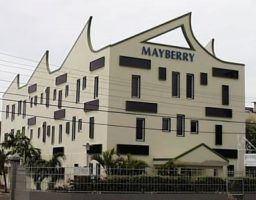
Mayberry Investments

Containment in expenses and a slight boost in income helped Mayberry to record an operating profit of $158 million over the $104 generated in the first quarter of 2012.

But a one-off hit to the profit of $337.3 million arising from the NDX debt exchange, plunged the operations into a loss of $178 million before a tax credit of $87 million and share of associated profits of $24 million rescued it somewhat. However, not even those credits could save it from an overall loss of $67.7 million compared to a profit last year of $113 million. Revenues net of revaluation gains or losses came in at $473 million in the quarter up from $452 in 2012 which includes the above trading gains.

The company made increased profits from trading gains which rose to $117.9 million up from $36.4 in the similar quarter of 2012. During the quarter Mayberry sold 12,073,214 units of shares in Access Financial Services Limited, for a total of $69 million, which reduced their total shareholdings to 38%. The sale of Access would have contributed a large portion of the trading gains. Net foreign exchange gains helped in boosting the top line with an increase from $9 million to $40 million. So did dividend income which moved up from $15 million to $34 million while fees and commission fell from $70.6 million to $19.4 million this year. Gains on investments fell to a loss of $11 million from nearly $3 million gain the year before.

NDX continuing effects | Mayberry will feel the effects, for a quarter or two of the lower interest rates that the new government bonds carry. The net interest income for the first quarter reflects some of the interest income compression. Although, the big write-off of investment gains is not expected to repeat any time soon, if at all, the boost in income of the gain on sale in investment and the FX gains may not recur to the same degree. This applies to the FX gains as the local currency has been revaluing since mid-April. Mayberry’s fair value reserves at the end of the quarter amounted to negative $326 million up from the $142 million at the end of December last year. The company, in a release accompanying the quarterly report, stated that $230 million of the amount is due to the fall in stocks prices on the local exchange. Some of this would have been reversed as some prices have rebound since the end of the quarter.

Financial Position | The balance sheet shows contraction in assets, which are down from $23.7 billion at March 2012 and $20.77 billion in December to $19.5 billion at the end of the 2013 quarter. A decline in the investment portfolio of $5.5 billion countered by a decline of $5 billion on the liability side for securities sold under repurchase agreements accounted for the bulk of the change since March 2012.

Mayberry stock traded last at $2.05 per share after the release of the results as investors seem to be focusing on the results excluding the impact of the one off NDX charge.

This one needs watching | The performance of the local stock market could change their fortune considerably both from a fee income and capital gains standpoint.

Economy pressuring Berger

Berger Paints is reporting slightly higher profits for the year to March 2013. As it usually is the case, the final quarter profits are the lowest and in recent years the company makes a loss in the quarter. The loss made in the final quarter of the fiscal year was down on the same period in 2012, while profit before tax was actually up 8 percent at $14.9 million compared to $16.3 million, due purely to a cut in finance cost from $1.574 million to just $27,000 for the quarter. Revenues in the quarter fell 4 percent to $320 million. In 2012 revenues for the same quarter was $332 million. Uncertainty within the economy as Jamaicans awaited the outcome of the negotiation between the government and the IMF could have been a factor in the lower sales.

Revenues for the year climbed to $1.6 billion. However, the increase of 4.38 percent was not enough to offset cost. Profit before tax was down by $2.3 million as a result of the poor top line performance, while a lower tax bill resulted in profit after tax being up, but just about, with the company reporting $34.08 million versus $33.32 in 2012. The improvement was aided by a lower tax payment down from $16 million to $13 million and a boost by $9.8 million coming from a reduction in inventory obsolescence provision.

Stock outlook | Berger’s fortunes have declined considerably in the last 3 years. In the March 2011 financial year, revenues were $1.5 billion with profits of $67.8 million and it will take some doing to get sales up and get back to those profit levels. The price earnings ratio (PE) of the stock is high at 14 times earnings, even as return on equity, is paltry at 7 percent. The company would need to put in a very robust performance for the stock price to rally in light of the high valuation.

The financial position of the company is healthy, with working capital being more than twice current assets to current liabilities. The company recently announced a 13 cents dividend that is payable in July 9th this year.

Berger5yrSummary