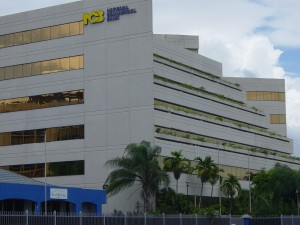
WI Petroleum pumps JSE Main Market in Q1


Stocks delivered relief for investors in the first quarter this year lead by an astronomical rise in the price of West Indies Petroleum, that led 21 stocks in recording gains in the Main Market, even as prices of 31 stocks declined.  

The JSE Market Index rose 8.83 percent from 317,986.88 at the close of December 2025, to 346,079.71 at the end of March, this year, compared with a fall of 1.7 percent in 2025 for the same period.
West Indies Petroleum 722 percent quarterly surge was the most dramatic single move on the Main Market in years and is best understood in the context of a low base price at the start of the quarter combined with heavy speculation in a stock that is scare and significantly overvalued with a PE of 221, with minimal growth in profits. Kingston Properties was the second-best performer with a gain of 53 percent, reflecting improved quality of the 2026 operating profits and precious severe undervaluation of the stock. Transjamaican Highway rose 42 percent, buoyed by growing revenues and profit with positive projections tied to increased vehicular traffic from the Mandeville leg of Highway 2000 and increased dividend payment. Sagicor X-Fund advanced 23 percent, with its performance underpinned by improving profit outlook. NCB Financial Group rounded out the top five with a 21 percent gain, recovering from prior-year lows as the market repriced the stock from a vastly oversold position in 2025 as the group’s chairman struggled with negative perception that filtered into the stock’s performance.

Underperformers
On the losing side, Proven Investments (PRVN) declined 22 percent, weighed down by increased cost that resulted in a small loss in the December quarter and sharply reduced profit for the nine months versus the similar period in 2025. Mayberry Group (MBG) fell 21 percent, reflecting losses from the performance of its underlying equity holdings and a small loss on net interest income in 2025. Caribbean Producers Jamaica (CPJ) and Mayberry Jamaica Equities (MBJ) each declined 17 percent, with CPJ facing headwinds from mixed results for 2025 and reduction in visitor arrivals to the country that will affect sales and profit negatively in 2026, as the bulk of revenues come from that sector. Losses at MBJ ballooned sharply for 2025 due mainly to fall in market value of investments. Palace Amusement dropped 16 percent, with the company posting losses for the half year to December and continues to face challenges with returning to patronage at the pre COVID levels. Supreme Ventures (SVL) retreated 14 percent, as profits declined in 2025 and the gaming market faces increased competition, while concerns over gaming revenue sustainability also weighed on sentiment.
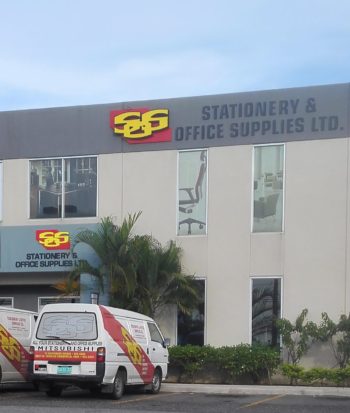
Stationery & Office Supplies drops in 2025


A six percent rise in revenues in the first nine months of 2025 melted down to a modest 1.3 percent for Stationery & Office Supplies (SOS) for the year, to $1,866 million, over $1.843 billion recorded in 2024, following the negative impact on sales caused by the impact of Hurricane Melissa in the last quarter.

While the top line held up well, supported by a 50 percent surge in export sales across the Caribbean region and strong growth from the EVOLVE furniture line, the bottom line came under considerable pressure, partially affected by the impact from the hurricane and lower margins from exports.

Stationery & Office Supplies hit a record high on Friday.

Stationary & Office Supplies – Montego Bay office.

Gross profit for the year came in at $953 million, down 5.5 percent from $1.01 billion in the prior year. The gross profit margin narrowed from 54.7 percent to 51.1 percent, reflecting higher shipping and input costs that the company chose to absorb, as well as the lower-margin profile of the growing export business. Cost of sales rose to $913 million from $835 million, a 9.4 percent increase that meaningfully outpaced revenue growth.
Administrative and general expenses climbed 7.2 percent to $612 million, driven largely by a 9.5 percent increase in staff costs as the workforce expanded from 162 to 170 employees and management remuneration that rose to $142 million. Selling and promotional expenses were essentially flat at $154 million, while depreciation and amortisation held steady at $45 million. Total expenses for the year reached $828 million compared to $785 million in 2024, a 5.5 percent increase.
Operating profit fell sharply to $137 million from $228 million in 2024, a decline of approximately 40 percent. Net finance income of $11 million and foreign exchange gains of $10 million, resulted in pre-tax profit for the year of $160 million, down 35 percent from $247 million in the prior year. The effective tax rate was approximately 17.4 percent, after accounting for a 50 percent tax remission as a Junior Market listed company. Net profit after tax amounts to $133 million, well below $223 million in 2024, a fall of 40 percent.

Earnings per share for the full year was 6 cents, down from 10 cents in 2024. The company paid dividends of $45 million during the year, representing 2 cents per share, the first dividend distribution since 2023.

Fourth Quarter 2025
The fourth quarter was severely disrupted by Hurricane Melissa, with Revenues declining by 14 percent to $377 million, from $437 million in the same period of 2024. Gross profit collapsed by around 50 percent to roughly $105 million as storm-related inventory losses at the Montego Bay warehouse and reduced trading activity weighed heavily on results. Expenses for the quarter declined 11 percent to approximately $183 million as the company curtailed discretionary spending. The net result was a pre-tax loss of approximately $6 million for the quarter, compared to a pre-tax profit of $15 million in Q4 2024, a swing of $21 million. The quarterly EPS was aa loss of 0.2 cents.

Segment Performance
The Furniture segment remained the powerhouse of the business, generating revenues of $1.35 billion in 2025, up 9.6 percent from $1.23 billion in 2024, with a gross profit of $760 million and a segment gross margin of 56.4 percent. The Book segment, representing the SEEK brand, saw revenues decline sharply to $76 million from $106 million, with gross profit falling to just $6 million from $27 million, reflecting both hurricane disruption and the pre-commissioning stage of the new factory. Stationery and other supplies posted revenues of $441 million, down 13 percent from $506 million, generating a gross profit of $187 million at a margin of 42.4 percent.
The company had an official opening for the Seek factory a week ago, with reports that it elicited some fresh orders and increased interest in the products that are manufactured. As the leading player in the office and stationery business smaller players who may want to exit the business will most likely look to them to be acquired. This is an ever present possibility, so investors should not be surprised if there are such developments in the future that could push revenues and profit.

Balance Sheet
urrent assets at year end stood at $1.06 billion, with current liabilities of only $358 million, with a net current asset of $701 million, a modest improvement from $687 million in 2024. Cash and equivalents rose 15 percent to $382 million from $332 million. Inventories grew 4.5 percent to $416 million. Shareholders‘ equity increased to $1.64 billion from $1.55 billion, with a net asset value per share of 73 cents. Long-term borrowings, totalled $17 million, down from $27 million.
The company generated gross operating cash of $201 million, after favourable working capital movements and tax and interest payments, net operating cash flow was $215 million, ahead of the $187 million generated in 2024. Capital expenditure consumed $114 million, primarily on the SEEK factory build-out, motor vehicles and computer equipment. Financing outflows of $69 million included the dividend payment, lease repayments and loan servicing. The net increase in cash for the year was $50 million.
ICInsider.com projects earnings per share for 2026 at 15 cents at a PE ratio of 12.3 times earnings at $1.85 the stock last traded at on Thursday. This compares to the Junior Market average of 15.6 currently. At the close of trading on Thursday supply of the stock for sale has dried up with only 7 offers of 149,000 share for sale. Watch this stock that could deliver a 50 percent gain or more for the year.

SOS SEEK’s factory opening March 27


Stationery and Office Supplies will officially opens its newly completed SEEK book manufacturing and storage facility, on March 27. A landmark investment amounting to over $150 million, significantly expands the company’s production capacity as it enters a new phase of expansion and growth in its book production business.
Stationery & Office Supplies hit a record high on Friday.

Stationary & Office Supplies – Montego Bay office.

The new facility, located at 26 Collins Green Avenue, and close to the Stationery and Office Supplies offices on Beechwood Avenue, encompasses 8,000 square feet of dedicated manufacturing and storage space, built at a cost exceeding $150 million. The expansion increases SEEK’s operational floor space by 300 percent, providing the room needed to scale production, house new machinery, and build inventory buffers to support both local and regional demand. Management indicates that the plant has the capacity to supply Jamaica with the total needs of exercise books with capacity for export.

Following headwinds in the Books segment in 2025, revenues declined to $76 million from $106 million in 2024, due problems with machinery and disruption to sales due to damage caused by Hurricane Melissa in the western section of the island.

Stationery & Office Supplies new book making operation.

With new machinery now tested and staff fully trained, the company is already seeing a meaningful step-up in production volumes and improved unit economics as the facility scales up. The investment also aligns with SOS’s broader sustainability agenda in broadening the portfolio of products for sales locally and in the wider Caribbean.
Reduction in Seek sales during the year helped in keeping revenues for SOS to $23 million more than the $1.84 billion in 2024, with 2025 ending at $1.87 billion. Stationery and other items also contributed less revenues than in 2024, with sales slipping $65 million from $506 million to just $441 million in 2025.

Growth surges at Omni Industries


Following the third quarter jump of 37 percent, revenue surged 50 percent to $616 million in the December quarter at Omni Industries. The surge was driven primarily by construction products, which accounted for 57 percent of total sales and delivered a solid turnaround in profits for the 2025 fourth quarter, with a profit of $28 million, compared with a loss of $25 million in the final quarter of 2024. Earnings per share jumped from a loss of 10 cents in 2024 to 11 cents.

For the 2025 fiscal year, revenues climbed a respectable 14 percent to $2.22 billion, up from $1.95 billion in 2024, with profit increasing a solid 34 percent to $170 million over the $127 million in 2024. Earnings per share amount to 6.8 cents and 5.3 cents in 2024.  
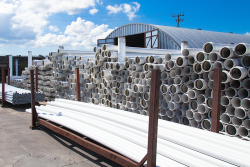
This significant growth in the fourth quarter reflects heightened demand following Hurricane Melissa, as customers accelerated procurement of essential construction and storage materials, Management stated in the report to shareholders. This raises the question about the level of sustainability of increased sales, particularly the increase in the December quarter over and above the third quarter.

The quarterly gross profit margin amounts to 39.3 percent, up from 37.7 percent in the prior year and ended with gross profit of $242 million, a 57 percent improvement over the $154 million in 2024, outpacing revenue growth.

The year-to-date gross margin dropped from 44.8 percent to 40.1 percent, reflecting higher input costs as the company sourced raw materials from non-traditional suppliers to navigate global trade tensions and supply chain disruptions. Notably, operating expenses remained flat year-over-year at $719 million.

The operations generated $220 million in cash flows and $171 million after changes in working capital, but $219 million went into Property, Plant and Equipment that expanded by 37 percent to $603 million, from $441 million in 2024.

Shareholders’ equity increased to $1.097 billion from $927 million in 2024.  Long-term loans increased from $207 million to $272 million. Current assets amount to $1.25 billion, up slightly over the end of 2024, while current liabilities ended at $484 million, down from $526 million at the end of the previous year.

ICInsider.com projects 12 cents in earnings per share for 2026. Growth in revenues in the December quarter, if sustained, could drive revenues and profits higher than projected. At a current price of $0.98, the current PE is 8.2 versus the market average of 14.2, leaving room for growth in the stock price.

50% jump in profit at Wisynco


Profit jumped 50 percent after tax for Wisynco Group for the December quarter to $1.5 billion, compared to $1 billion in 2024, with earnings per share of 39 cents compared to 26 cents in the December 2024 quarter. The solid profit performance was firmly grounded on a 14 percent revenue bounce to $16.2 billion, from $14.2 billion in the group’s 2024 second quarter and up a mere 2 percent for the first quarter revenues.

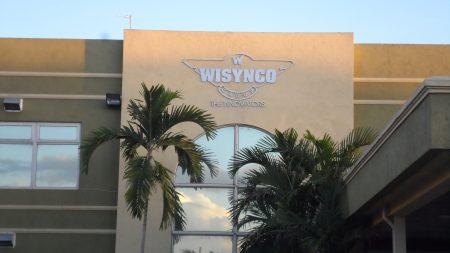
Wisynco Q2 profits jump 50%.

Revenues for the half year rose by a slower 12.2 percent pace than the second quarter, to $32.4 billion, from $28.9 billion in 2024, while profit after tax rose by just 19 percent to $2.96 billion from $2.49 billion. “The sustained improvement in sales is a result of our significant capital outlay in production capacity, therefore being able to meet demand and the introduction of new product lines, including our new brewed products and an improvement of 14 percent in our exports. We formally launched our brewed product at the start of Q2 and the response to the products that have been placed on the market has been encouraging,“ Andrew and William Mahfood stated in their report to investors.

Gross Profits jumped 26.7 percent over the prior year second quarter to $5.9 billion from $4.7 billion of the prior year, whilst gross margins climbed to 36.6 percent up from 32.9 percent for the same quarter last year.  For the half year gross profit climbed 15.4 percent to $11.56 billion from $10 billion in 2025 with gross profit margins of 35.72 versus 34.72 in 2025.

Wata one of Wisynco best known brands

Selling and Distribution expenses rose 7.7 percent during the second quarter to $3.47 billion from $2.95 in 2024 and climbed 10.5 percent for the six months to $20.8 billion from $18.8 billion in 2024. Administrative expenses for the quarter amount to $631 million, 10.4 percent more than the $571 million for the 2024 quarter. It rose 2.8 percent to $1.2 billion for the six months from $1.18 billion in 2024. Finance costs jumped from $115 million to $245 million in the latest quarter and rose from $118 million to $401 million in the six months. Finance expenses were partially offset by finance income of $139 million in the 2025 first quarter, up from $119 million in 2024 and for the half year, $291 million up from $245 million.

The operations generated Gross cash flow of $4.7 million, growth mainly in receivables, inventories, addition to fixed assets and investment in associated companies of $2.45 billion, offset by proceeds from investments and funding the payment of $866 million dividends, resulted in a $2 billion outflow of funds, reducing Cash and Cash Equivalents to $5.2 billion, at the end of the period.
Current assets ended the period at $21.4 billion, including trade and other receivables of $6.9 million, cash, bank balances and investment securities of $10.3 billion.
Current liabilities ended the period at $8.6 billion and net current assets at $12.7 billion.
At the end of December, shareholders’ equity amounts to $30.6 billion with long term borrowings at $5.9 billion and short term at $955 million.

ICInsider.com computation projects earnings of $1.80 per share for the fiscal year ending June 2026, with a PE of 13 times the current year’s earnings based on the last traded price of $23.62 on the Jamaica Stock Exchange Main Market. Net asset value is $8.17, with the stock selling at a premium of 2.77 times book value, well above the average for Main Market companies.  The company declared a dividend of 23 cents payable of March 4 versus a similar amount in April 2025.

Woodcats International heading to the JSE Junior Market


Woodcats International, manufacturer of wooden pallets and related products, in Jamaica, along with the majority owner are offering to the public by way of an Initial Public Offering (IPO) up to 833.33 million ordinary shares at J$0.90 per share, that will raise J$750 million, if fully taken up and is expected to list on the Jamaica Stock Exchange Junior Market, that will permit them to enjoy 10 year period of tax reduction.

Founded in 1999, the company was acquired by Derrimon Trading Company in 2018, and grown appreciably, with net profit increasing more than sevenfold over five years while doubling revenues to J$1.08 billion in 2024. Interim results show a much slower growth of just 3.8 percent to $840 million, slightly better than the 3.2 percent increase enjoyed in 2024.
The PE ratio at the IPO price of 90 cents is just 11.5, based on the latest profit results, which is below the Junior Market average of over 13, with several stocks priced around 18. ICInsider.com projects a rise in the price following the IPO and listing on the junior Market of the Jamaica Stock Exchange.
The issue opens on February 2, 2026 and is scheduled to close on February 20,
The board of directors comprises. Earl Anthony Richards, Derrick Cotterell, Ian Kelly, Patrick Mignott, Nicole Burgher, Jermaine Burrell, Carlton Samuels.
The Company effected cost controlled measures with a 6.2 percent reduction in cost despite inflationary pressures. This reduction was achieved while expanding operations, highlighting operational efficiency. Finance costs increased due to higher lease interest expense from additional warehouse space to facilitate growth.
Current Assets amount to $479 million as of September 2025, compared to $490 million in 2024.
Cash and cash equivalents ended the period at $55 million, compared with $59 million in 2024. The company also hold investments amounting to $108 million, including 30 million Derrimon Trading Company shares with a market value of $60 million. Shareholders’ equity stands at $633 million, with non-current liabilities at $144 million, while current liabilities sit at $124 million.

PROSPECTS FOR 2026
Woodcats seems positioned for continued growth with a three-to-five year plan targeting 20 percent compound annual revenue growth through 2028. Actual outcomes can vary from plans. Key strategic initiatives include expanding certified heat treatment capacity by 50 percent within three years, launching composite wood-plastic pallets by Q4 2026, increasing pallet production output by 30 percent by 2027, and growing the Summerland retail brand with five distribution points across Jamaica and CARICOM by 2027. The Company aims to diversify revenue streams with ancillary sales contributing 20 percent of total revenue by 2028, while establishing Woodcats as the recognised regional hub for sustainable pallet solutions with entry into two new CARICOM markets by 2026. Process automation targeting 40 percent of production by 2026 is expected to reduce production time per pallet by 20 percent, supported by full adoption of digital supply chain management tools by 2027.

NCB Capital Markets is the broker for the issue.

Concerns over WI Petroleum 1,300% Rally


West Indies Petroleum Terminal closed trading on Friday at $7.25 per share, capping a remarkable 1,300% surge since its December 23 debut at $0.50. The spectacular gains resulted in the stock trading at valuation levels that defy conventional metrics, with a huge decline clearly on the cards.

At Friday’s close, WIPT trades at 244 times 2024 earnings, according to data compiled by ICInsider.com, after eliminating the one off impairment cost mentioned below, a stark contrast to the broader Jamaica Stock Exchange with an average PE of 18 times earnings. The company was initially valued at roughly 11 times earnings at listing.
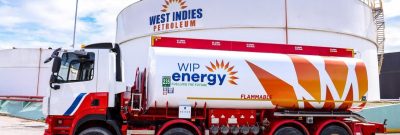
The rally reflects scarcity more than fundamentals. WIPT was listed by introduction, with no new shares issued, resulting in a minimal float, fuelling speculative demand.

The company has not released any results for 2025, but profitability remains modest, with net profit of just US$1.04 million on revenue of US$8.21 million for 2025, a 51.9% earnings decline from 2023. The results for 2024 were driven by higher finance costs and a US$1.04 million impairment charge, which is not expected to repeat.

The extreme valuation disconnect suggests investors are pricing in dramatic earnings growth that has yet to materialise. Management has signed third-party storage agreements with Musket Corp, TotalEnergies, and Sunoco to supply fuel across Jamaica, which diversifies revenue, but the path to justifying a 244x multiple remains unclear.

For value investors, the math is sobering: at $7.25, the market is betting WIPT will transform from a US$2 million profit company into something vastly larger, in the order of 17 times, amounting to a profit of US$34 million that is not going to happen.

WI Petroleum reporting slackness


West Indies Petroleum Terminal Limited (WIPT) was listed on the Jamaica Stock Exchange in December, with the last financial statements up to December 2024. In a release to the stock exchange, the company indicates that it will exercise the option to submit its unaudited financial statements for the fourth quarter ending December 31, 2025 and its audited financial statements within 90 days of its year end.

There is something completely wrong with this listing. The stock is currently trading at a PE of 51 based on 2024 earnings adjusted for a one off expense, with very little supply coming on the market. Since listing, only 16,003 shares have traded to date, with the stock in heavy buying demand.
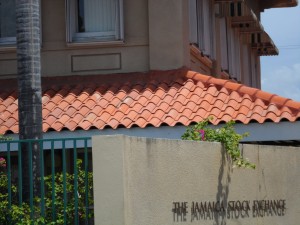
WIPT is the only company currently listed with no financial report after more than a year since the last report. Investors are trading blindly, with only old information available to use to assess the company.

The Jamaica Stock Exchange and the Financial Security Commission have a responsibility to the public to ensure investors have up to date information to base their trading on. It cannot be right for a company to list so late in the year, without releasing interim results. For the company to now state that they are going to release interim figures in 90 days of the 2025 last quarter is not acceptable when the requirement is 45 days.

The stock exchange cannot have two rules for companies listing by invitation and those listing through an IPO when it comes to financial data. An IPO has to report up to date financials no more than a few months old so why was WIPT allowed to list with 12 months old financials?
The company’s management would do itself and the company a great deal of good by immediately releasing the interim results for the March, June and September quarters and releasing the December quarterly results within 45 days, as is the JSE requirement.
The above and other grave unresolved issues in the stock market call for action to protect investors, not just a few.

Profits climb at NCB Group


Jamaica’s largest financial conglomerate, NCB Financial Group, reported profits for the fiscal year to September of $23 billion, attributable to shareholders of the Group or $9.59 per share, with profit of $4.2 billion or $1.73 per share for the September quarter compared with a loss of $330 million in 2024.

The group benefited from a $15 billion one-time gain on the sale of a subsidiary; excluding this, earnings would have been just $13 billion for the year, compared to $13.3 billion generated in 2024 and earnings per share from continuing operations would be $7.60, up from $5.62 in 2024.
The group declared a dividend of 50 cents per share, which will be paid in December and will bring the full year to $2.per share.

The stock is severely undervalued, with a PE ratio of only 5.2 times 2025 earnings and even less based on 2026 earnings, which ICInsider.com projects to rise. The stock, which now trades around $40 each, trades well below the net asset value of $77. Holding back the group is the stagnation in lending, with loans falling to $618 billion from $626 billion in 2024.
NCB is accorded the ICInsider.com BUY RATED award.

General Accident to more than double


General Accident Insurance Company and Beacon Insurance Company Limited, a Trinidad and Tobago based general Insurance company, announced their intention to complete a transaction to create a leading Caribbean insurer.

Paul Scott, Chairman of General Accident shake hand with Beacon’s, Gerald Hadeed after the signing of the acquisition agreement

The acquisition will push General Accident’s gross written premiums up to a projected sum in excess of J$32 billion annually, up from more than $11.4 billion last year.

General Accident’s parent, Musson (Jamaica) purchased 100% of Beacon in October. Beacon will subsequently become a subsidiary of General Accident, subject to additional regulatory approvals.

The acquisition will greatly expand General Accident’s presence in Trinidad and Barbados and allow it to enter new markets in Dominica, Grenada, St. Kitts, St. Lucia and St. Vincent, the report stated.
Beacon will continue to operate as an independent subsidiary of General Accident. The combined company intends to maintain both the Beacon and General Accident brands in Trinidad and Barbados.
Beacon reported insurance revenues of TT$505 million (J$12 billion) in 2023, the latest financial statements seen, with total assets of TT$788 million and shareholders’ equity of TT$192 million (J$4.6 billion). Profit reported by Beacon in 2023 was TT$11 million or J$264 million.
General Accident reported insurance revenues of $9.6 billion in the nine months to September this year, up from $8.3 billion for the same period in 2024. For the quarter ended September, $3.3 billion versus $2.9 billion in 2024, with profit after tax of $297 million for the nine months to September 2025 versus $216 million in the prior year. For the September quarter, profit was $122 million, up from $57 million in 2024. These results are before any claims, likely to come from the damage caused by the recent hurricane.

Beacon has offices and an Agency network that spans Trinidad & Tobago, Barbados, Grenada, St Lucia, St Vincent & The Grenadines, St Kitts & Nevis, and Dominica.
General Accident, will need to rationalize cost by reducing, where possible, areas of duplication within the expanded group. Savings will also come from better underwriting terms that will flow from a lager group and a wider geographic expanse and the ability to expand more rapidly into a much bigger group. IC Insider.com sees, General Accident’s current Barbados and Trinidad general insurance companies being absorbed into Beacon and thus reduce operating costs.