Scotia Group to delist from JSE


Scotia Group, after listing on the Jamaica Stock Exchange since 1967, is now slated to be taken private at a buyout price of $61.50, the Group announced today.  
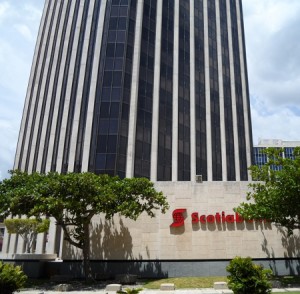
The group reports that, based on the unanimous recommendation of a committee of independent directors of the board of directors of SGJL, it has entered into a definitive arrangement agreement with its majority shareholder, Scotiabank Caribbean Holdings Limited to take SGJL private whereby, among other things, all of the issued and outstanding shares of SGJL that SCHL does not currently own will be repurchased for $61.50 in cash per share, subject to court approval as well as the approval of SGJL’s minority shareholders.  

Scotia Group released results for the year to April, with profit of $5.96 billion, up from $5 billion last year for the April quarter and $10 billion for the year to date, versus $9.2 billion in 2025. Earnings per share came in at $1.92 for the latest quarter and $3.24 for the year to date. The offer price is only 8 times the current year’s earnings, which undervalues the shares. There was also an announcement of a dividend of 45 cents per share to be paid in July.

Remittances to Jamaica rise


Remittance inflows to Jamaica continue to increase, with a rise of 3.9 percent to US$314 million for March, compared with US$302.4 million in same month last year. The growth in March, continues the trend in January and February this year, with increases of 5 and 3.4 percent respectively, data released by Jamaica Central Bank show.

Inflows climbed of 4.1 per cent to US$856 million or an increase of $33.5 million for January to March period this year, over the corresponding period of 2025 that enjoyed inflows of US$822.5 million.

Jamaica missed enjoying record inflows last year when total inflows fell just US$11.4 million short of the record inflows of $3.495 million in 2021, so far total inflows are on track to surpass $3.5 billion this year barring any unforeseen developments and therefore set a new all-time record high.

Jamaica’s tourism continues to rebound


Tourist traffic through Jamaica’s largest airport, Montego Bay’s Sangster International,  dropped 22 percent in April this year, to 335.600 from 430,400 passengers in 2025, with a year to date drop of 29.2 percent to 1,252,900 from 1,769,400 passengers last year, data released by Grupo Aeroportuario Del Pacifico, operators of Jamaica’s two largest airports, show.

The April numbers represent an improvement over the 25.7 percent fall in March, this year, as well as for the year to date, with a decline for the three months to March of 31 percent. The numbers represent incoming and outgoing passengers and locally based Jamaicans, although not the actual number of tourist traffic, the data provides an accurate proxy for the sector’s performance. Data collated by the Jamaica Tourist Board on the industry are unfortunately only released to the public several months in arrears.

Traffic through Kingston’s Norman Manley dropped 6 percent to 145,700 from 155,000 last and for the year to date it slipped 3.9 percent, from 583,000 to 560,500. Year to date, 414,800 passengers, moved through the country’s capital international airport, with a fall of 3.1 percent versus 428,000 for the same period in 2025.

Profit explosion at Transjamaican


Profit surged a solid 46 percent at Jamaica’s premier toll operators –Transjamaican Highway to US$13.2 million, for the quarter to March this year, compared to US$9.1 million in 2025. The vastly improved profit performance flowed from revenues that jumped an almost incredible 29 percent to US$29 million, from US$22.5 million for the 2025 first quarter.

Management indicated that “increased commuter traffic across the network was one area that contributed to the growth in revenues.

While revenues were climbing sharply, helped by US$3.5 million earned from the Mandeville leg of the highway, which came on stream during the period, costs remained subdued, with a 9 percent rise to US$12.3 million from $11.3 million in 2025. Taxation rose from US$3 million to US$3.55 million.

The company reported earnings per share of 0.0106 US cents, equivalent to 16.74 Jamaican cents per share, which puts the full year earnings at 67 Jamaican cents for the year. At this level of earnings, the stock is priced around 11 times current year’s profit.

Following the end of the quarter, a dividend of US$13 million, equivalent to all the profit generated in the quarter, was paid in April, an increase of 30 percent over US$10 million paid in the first half of 2025.

NCB trades at a near 2-year high


Trading in shares of NCB Financial Group was halted after the market opened on Monday, with the price jumping to $59.22. Trading resumed just after 10 this morning. On Friday, the stock closed at $51, the highest in 17 months.

If today’s price holds at the end of trading, it will be the highest since June 2024. A total of 24,511 shares were traded so far. The attached chart shows the top 40 orders to buy and all orders to sell.
Currently, the lowest offer is for 1,000 shares at $58.90 and 12,713 at $59. The highest bid is 2,500 units at $52.05.

Jamaica tourist arrivals bouncing back


Tourism traffic to Jamaica continues to improve since the passage of Melissa in late 2025, with Sangster International Airport in Montego Bay showing a decline in March of 25.7 percent, with 358,400 passengers passing through the Montego Bay airport compared to 482,600 in 2025, data released by Grrupo Aeroportuario Del Pacifico show.

Kingston Norman Manley Airport has started to reveal positive numbers with a margianal one percent improvement for March, with 140,600 passengers passing through the airport versus 139,200 in the 2025 period and year to date, 414,800 passengers, down 3.1 percent versus 428,000 for the same period in 2025.

The decline in March compares with 31.4 percent fall in February and 34.7 percent for the first two months of the year for Montego Bay and a decline of 2.2 percent for Kingston for February and 5.1 percent for the year to date in February.

Jamaica is not the only destination showing a sharp decline in March for international travel, Mexico Tijuana is down by 16 percent and Puerto Vallarta, a decline of 32 percent.

Melissa pressures Junior Market stocks


The Junior Market delivered minor gains in the first quarter of 2026, with the Market Index edging 0.21 percent higher, from 3,401.41 at the end of December, last year, to 3,408.64 at the close of March, 2026. While the index’s move appeared subdued, individual stock performance within the market was dynamic with the leading stock rising a solid 85 percent in a market pressured by disruption caused by Hurricane Melissa that played a major role in pressuring several stocks in the Junior Market.

A number of companies suffered from a loss in revenues during the final quarter of 2026, following the passage of the hurricane. Others faced  continued revenue pressure from the critical tourist sector that recorded sharp decline in visitor arrivals in the first quarter of 2026 and probably for a longer period.
At close of the quarter, prices of 17 stocks rose and was overwhelmed with 29 declining.

Amongst the carnage that some companies suffered, Jetcon Corporation sparked with new cars helping to deliver the top spot for the Junior Market with solid 85 percent gain to lead by a wide margin for in closing the quarter at $2.78, following in a big surge in revenues and profits in 2025, with the expectation of improvement in profits in 2026, over that of 2025, with the fourth quarter of 2026 recording profit before tax of $33 million and pointing to the possibility of more growth in 2026.  Well behind the leading stock, MFS Capital rose a respectable 31 percent, helped by an undervalued stock with the company pumping out above average profit from ongoing operations for the six months, with revenues climbing 40 percent over that for 2024 resulting in profit from continuing operations before tax, rising form $9 million $28 million. Future Energy Source gained 27 percent, with the company posting strong December results from increasing sales, with profit surging 176 percent in the quarter over the prior year and suggesting a big rise for the full year and even more for the fiscal year ending in March 2027. Atlantic Hardware finished fourth, with an 18 percent advance, following increased demand for the stock, following the passage of hurricane Melissa. That did not show up in the company’s results for the December quarter, although revenues climbed but operating profit was flat. Caribbean Assurance Brokers was the fifth best performing Junior Market stock with a rise of 16 percent, with the price was recovering from selling pressure in late 2025.

Underperformers stock or the quarter was In Junior Market was Kintyre Holdings, which fell 46 percent, having ran up to 70 cents at the end up 2026, faced heavy selling in the quarter, as buyers reduced the price they were prepared to buy the stock at. Iron Rock Insurance declined by 29 percent, with investors concerned about the impact the hurricane would have on underwriting margin as well as concerns on the investment portfolio performance with lower interest rates in the country. Paramount Trading dropped 19 percent, reflecting some profit taking after the stock ran up in 2025 based on improved half year results but much lower second quarter profits compared with the first quarter as sales suffered with the interruption caused by Hurricane Melissa. Main Event shed 16 percent, with Hurricane Melissa shattering an already pressured operation that was passing through a period of reduced revenues resulting in a small loss for 2025 coming out of a year of uncertain economic outturn leading up to the general elections in 2025.

WI Petroleum pumps JSE Main Market in Q1


Stocks delivered relief for investors in the first quarter this year lead by an astronomical rise in the price of West Indies Petroleum, that led 21 stocks in recording gains in the Main Market, even as prices of 31 stocks declined.  

The JSE Market Index rose 8.83 percent from 317,986.88 at the close of December 2025, to 346,079.71 at the end of March, this year, compared with a fall of 1.7 percent in 2025 for the same period.
West Indies Petroleum 722 percent quarterly surge was the most dramatic single move on the Main Market in years and is best understood in the context of a low base price at the start of the quarter combined with heavy speculation in a stock that is scare and significantly overvalued with a PE of 221, with minimal growth in profits. Kingston Properties was the second-best performer with a gain of 53 percent, reflecting improved quality of the 2026 operating profits and precious severe undervaluation of the stock. Transjamaican Highway rose 42 percent, buoyed by growing revenues and profit with positive projections tied to increased vehicular traffic from the Mandeville leg of Highway 2000 and increased dividend payment. Sagicor X-Fund advanced 23 percent, with its performance underpinned by improving profit outlook. NCB Financial Group rounded out the top five with a 21 percent gain, recovering from prior-year lows as the market repriced the stock from a vastly oversold position in 2025 as the group’s chairman struggled with negative perception that filtered into the stock’s performance.

Underperformers
On the losing side, Proven Investments (PRVN) declined 22 percent, weighed down by increased cost that resulted in a small loss in the December quarter and sharply reduced profit for the nine months versus the similar period in 2025. Mayberry Group (MBG) fell 21 percent, reflecting losses from the performance of its underlying equity holdings and a small loss on net interest income in 2025. Caribbean Producers Jamaica (CPJ) and Mayberry Jamaica Equities (MBJ) each declined 17 percent, with CPJ facing headwinds from mixed results for 2025 and reduction in visitor arrivals to the country that will affect sales and profit negatively in 2026, as the bulk of revenues come from that sector. Losses at MBJ ballooned sharply for 2025 due mainly to fall in market value of investments. Palace Amusement dropped 16 percent, with the company posting losses for the half year to December and continues to face challenges with returning to patronage at the pre COVID levels. Supreme Ventures (SVL) retreated 14 percent, as profits declined in 2025 and the gaming market faces increased competition, while concerns over gaming revenue sustainability also weighed on sentiment.

JSE delivers first quarter gains


The USD Equities market was the best performing of the three Jamaica Stock Exchange (JSE) markets, with gains of 23.56 percent, in the first quarter of this year, driven mainly as a result of a 44 percent jump in Transjamaican Highway USD stock price and a 29 percent rise in AS Bryson US dollar listing. The 2026 performance is compares with a 10.7 percent contraction in the first quarter last year.

Jamaica Stock Exchange Indices at the end of March 2026 vs December 2025

The JSE Main Market closed the first quarter of 2026 on a notably positive note, mainly driven by 722 percent jump in the price of late 2025 listed West Indies Petroleum, with the JSE Index advancing 8.83 percent from 317,986.88 at the close of 2025, to 346,079.71 at the end of March, this year, compared to a decline of 1.7 percent in 2025 for the same period.. The All Jamaican Composite Index performed even more strongly, rising 11.91 percent over the same period from 365,314.38 to 408,845.09. In the 2025 first quarter it fell 1.3 percent.

The Junior Market Index edged up 0.21 percent from 3,401.41 at the end of December, 2025, to 3,408.64 at the close of March, 2026, while the market slipped 1.6 percent in the 2025
first quarter.

Record remittance inflows for January


Remittance inflows to Jamaica increase of US$13 million or a solid 5 percent in total remittance inflows to a record for the first month of the year, with January 2026 hitting US$273.2 million up from January 2025, data out of the Bank of Jamaica show.

In 2025 total inflows to the country rose by 3.84 percent to US$3.486 sit just under the record haul of US$3.497 billion in 2021. This year’s increase is lower than the 5.7 percent rise for January last year, 5.6 percent in May, 14.3 percent in November and 12.1 percent in December of 2025.

If total remittances remained flat for the rest of 2026, the country will end with record inflows for the year of just under US$3.5 billion.